Introduction
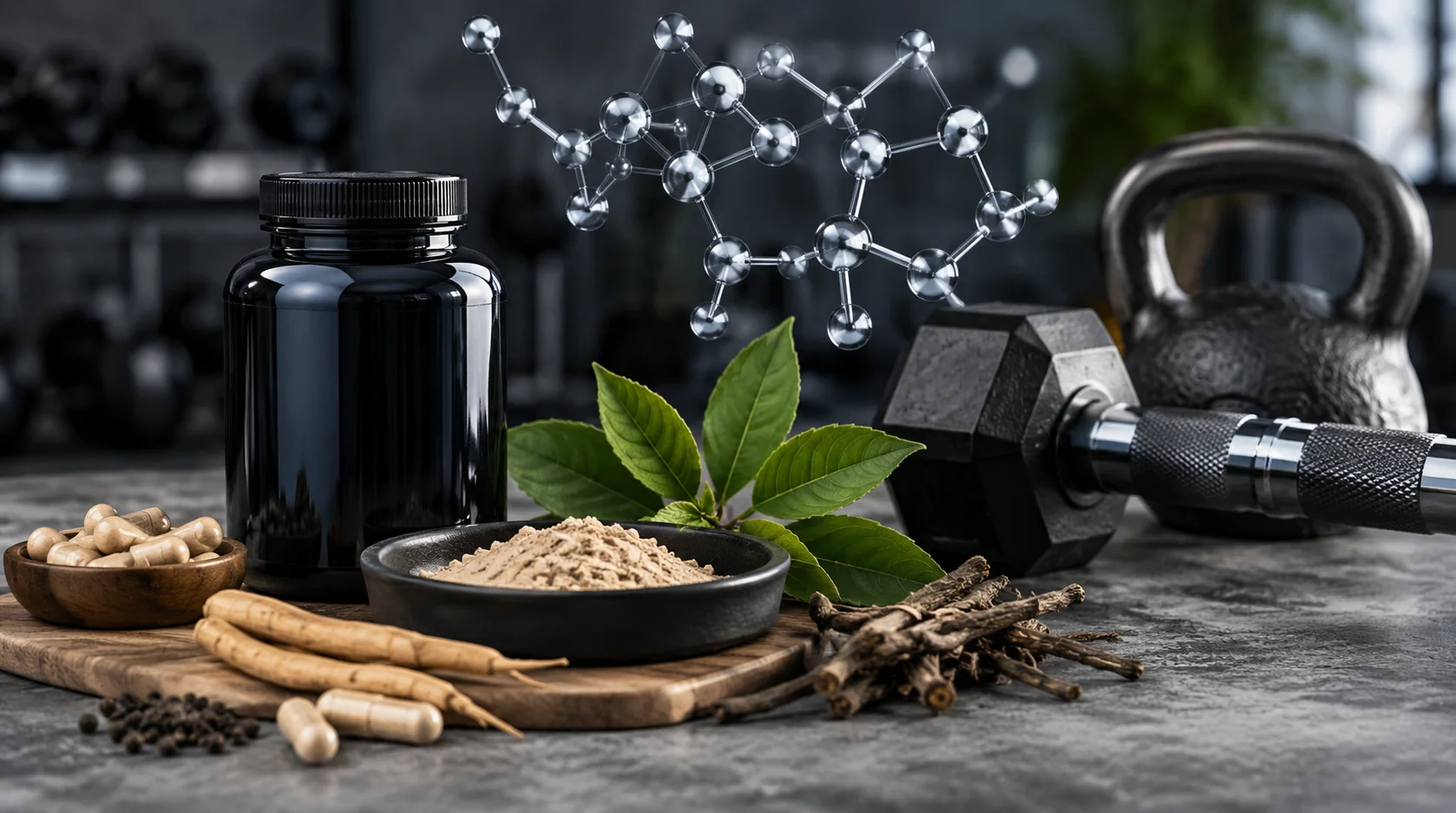
Search interest in testosterone supplements has spiked again, and the reason is straightforward: testosterone levels in men have been declining across population studies for decades, independent of age, and interest in non-prescription options has grown alongside rising awareness of low-T symptoms like fatigue, reduced muscle mass, and low libido. Before buying anything, it helps to understand what these formulas can realistically do, what the clinical evidence actually shows, and where the evidence runs thin.
This guide breaks down the science behind the most common ingredients in over-the-counter testosterone support formulas, what randomized trials say about them, and the safety considerations that matter before starting one.
The Science: How Testosterone Support Formulas Work
Testosterone production is governed by the hypothalamic-pituitary-gonadal (HPG) axis: the hypothalamus signals the pituitary gland, which releases luteinizing hormone (LH), which in turn signals the testes to produce testosterone. Most over-the-counter formulas attempt to influence this system through one of three mechanisms:
- Precursor hormones, such as DHEA, an adrenal androgen that the body can convert into testosterone through enzymatic pathways.
- Enzyme modulation, where compounds like fenugreek glycosides are believed to influence 5-alpha reductase and aromatase activity, enzymes involved in converting testosterone into other hormones such as estrogen.
- Adaptogenic and stress-modulating botanicals, such as Eurycoma longifolia (Tongkat Ali), which have been studied for their effect on cortisol, a stress hormone that can suppress testosterone production when chronically elevated.
None of these mechanisms replace the direct, high-dose hormone delivery of prescription testosterone replacement therapy (TRT). They are designed to support the body's own production within a normal physiological range, not to introduce exogenous testosterone.
Clinical Evidence & Potential Benefits
The strength of evidence varies meaningfully by ingredient. Below is what randomized controlled trials and meta-analyses currently support:
- A 2020 meta-analysis pooling four randomized clinical trials found that fenugreek extract supplementation was associated with a statistically significant increase in total serum testosterone in men (Hormoznejad & Fathi, Phytotherapy Research, 2020).
- A 12-week randomized, double-blind, placebo-controlled trial in 95 men aged 40-75 found that high-dose fenugreek extract increased salivary testosterone levels compared to placebo, though it did not significantly change self-reported libido (Study summary, Examine.com).
- A 6-month randomized, double-blind, placebo-controlled trial found that Eurycoma longifolia (Tongkat Ali) supplementation increased testosterone levels in nearly half of participants with androgen deficiency of aging males, with the largest gains observed when combined with resistance training (Maturitas, 2020).
- A separate 12-week, double-blind, placebo-controlled multicenter study of 105 men aged 50-70 with baseline testosterone under 300 ng/dL found that a standardized Eurycoma longifolia extract improved testosterone levels and quality-of-life scores versus placebo (Food & Nutrition Research, 2021).
Based on this body of evidence, ingredients like fenugreek and Tongkat Ali are among the more credible options for men looking to support natural testosterone production, promote healthy hormone balance, and may aid in improving energy and body composition when paired with resistance training. These formulas are not a substitute for a medical diagnosis of hypogonadism, and they do not cure, treat, or prevent any hormonal condition.
Important Considerations & Usage
Ingredient dose matters as much as ingredient choice. Many of the positive trial results above used specific, standardized extract doses (for example, 200 mg of standardized Eurycoma longifolia extract, or 500-600 mg of concentrated fenugreek extract) rather than raw herb powder in trace amounts. When evaluating any formula, check whether it discloses exact extract doses rather than hiding behind a generic "proprietary blend."
- Foundational factors — sleep quality, resistance training, and body fat percentage — have a larger measured effect on testosterone than any supplement ingredient studied to date.
- Most clinical trials showing benefit ran 8 to 12 weeks before measuring hormonal changes; supplements are not designed for immediate effect.
- Zinc and vitamin D deficiencies are independently linked to lower testosterone, and formulas that co-supplement these alongside herbal extracts have shown added metabolic benefits in trial data.
Safety Profile & Potential Side Effects
Transparency on safety is essential, and it varies significantly by ingredient class:
- DHEA is a hormone precursor, not a botanical extract. It is contraindicated in men with a history of prostate cancer or other hormone-sensitive conditions, and long-term use warrants periodic PSA monitoring in consultation with a physician.
- Fadogia agrestis, an increasingly popular ingredient in this category, has essentially no controlled human trial data. Animal research has found reversible testicular changes at traditional low doses but irreversible testicular histology changes at higher doses in rat models (Yakubu et al., 2008). Men trying to conceive, or with any liver or hormonal condition, should discuss this ingredient with a physician before use.
- Testosterone-support formulas are generally not recommended for men under 18, whose endogenous hormone axis is still developing.
- Anyone on hormone-related medication, blood thinners, or with a cardiovascular or liver condition should get physician clearance first, since herbal androgens and adaptogens can interact with prescription drugs.
- Baseline bloodwork (total and free testosterone, estradiol, PSA) before starting, and again at 8-12 weeks, is the only reliable way to know whether a given formula is doing anything measurable for your specific hormone profile.
Conclusion & Recommendation
The most evidence-backed testosterone support formulas share two traits: they use standardized extracts at doses that match what was actually tested in clinical trials, and they combine multiple validated mechanisms rather than relying on a single unproven ingredient.
Black Ox by Enhanced Labs is one formula built around this multi-pathway approach, combining fenugreek and Tongkat Ali with DHEA and estrogen-regulating compounds in a stated full-dose formulation. As with any testosterone support product, it is worth reviewing the exact per-ingredient dosages on the product label against the clinical doses cited above, and discussing use with a physician if you have any of the risk factors described in the safety section. You can review the current formulation and pricing directly via this link.

The Health Findings Lab Research Team is a dedicated group of health writers, data analysts, and editorial reviewers. Operating under strict, evidence-based editorial guidelines, the team synthesizes peer-reviewed clinical literature to provide objective insights. Our collaborative approach ensures that every review prioritizes verifiable efficacy and manufacturing transparency over marketing hyperbole.