The Shift Toward Cognitive Optimization
The wellness landscape is undergoing a structural shift. Where retail shelves were once dominated exclusively by whey protein and metabolic stimulants, the focus has pivoted toward cognitive preservation and stress modulation. This category, often termed "mental optimization," responds to growing rates of chronic stress and cognitive fatigue. Rather than relying on high-dose caffeine, consumers are seeking evidence-based compounds that promote sustained focus and mitigate physiological stress responses.
This transition is grounded in robust clinical research evaluating nootropics and adaptogens. These compounds target specific neurochemical pathways to support mental acuity, energy metabolism, and resilience without the sympathetic nervous system overstimulation characteristic of traditional energy supplements.
The Science: Mechanisms of Cognitive Support
The efficacy of these compounds lies in their diverse mechanisms of action within the central nervous system.
Creatine Monohydrate
While established in sports nutrition, creatine's role in neuroenergetics is increasingly recognized. The brain is highly metabolically active, accounting for nearly 20% of the body's baseline energy expenditure. Creatine facilitates the rapid regeneration of adenosine triphosphate (ATP) in neurons, supporting cognitive tasks, especially during sleep deprivation or complex executive functioning.
L-Theanine and Adaptogens
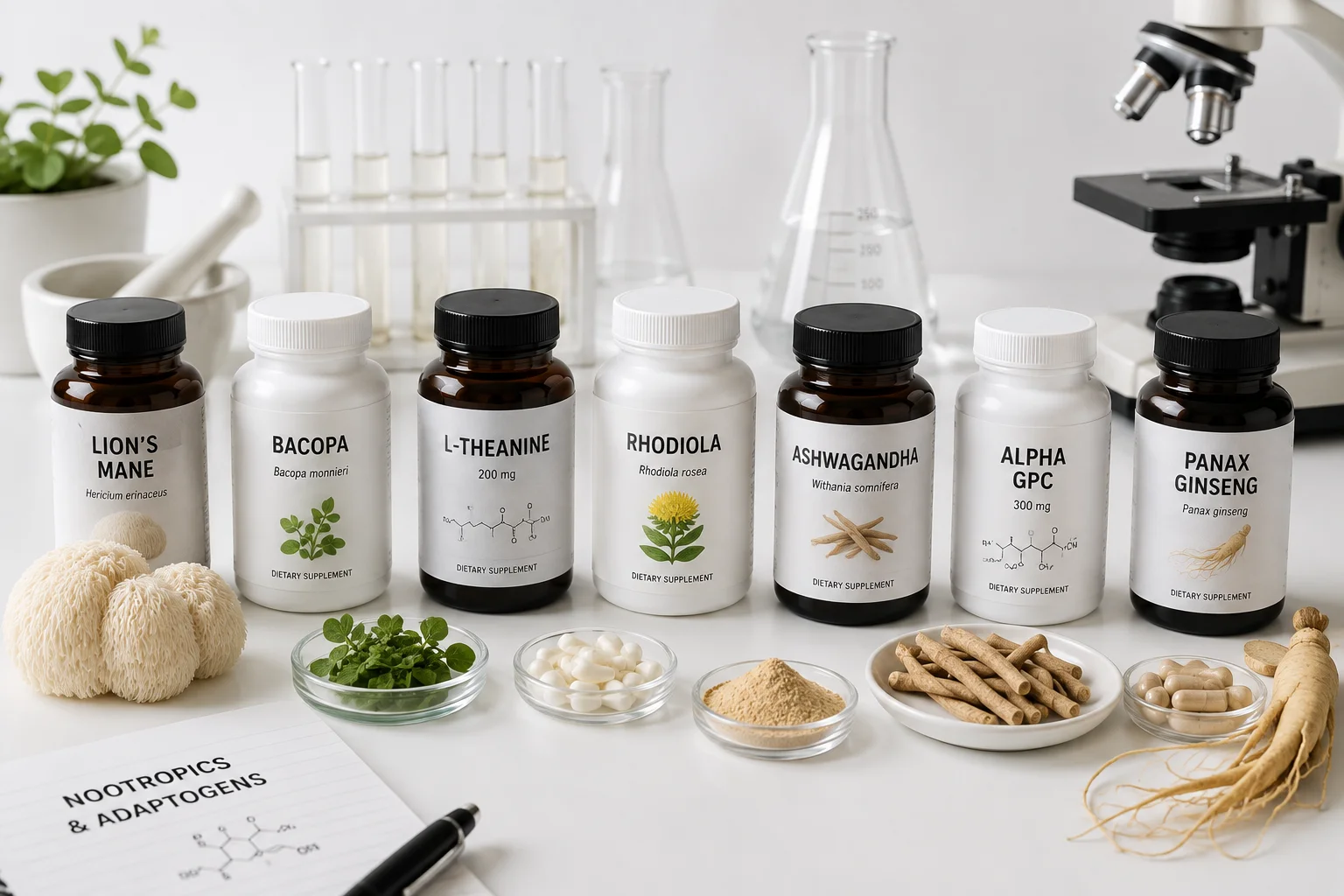
L-Theanine, an amino acid native to Camellia sinensis (green tea), easily crosses the blood-brain barrier. It promotes alpha brain wave generation, which is associated with a state of relaxed alertness. For a deeper understanding of how these mechanisms synergize, reviewing the evidence behind natural nootropics for mental health and focus like L-theanine, Bacopa, and Rhodiola provides critical context. Concurrently, adaptogens like Ashwagandha (Withania somnifera) interact with the hypothalamic-pituitary-adrenal (HPA) axis to modulate cortisol synthesis, promoting homeostasis during periods of heightened stress.
Hericium erinaceus (Lion's Mane)
This medicinal mushroom contains hericenones and erinacines, unique compounds shown in preliminary studies to stimulate the synthesis of Nerve Growth Factor (NGF). NGF is crucial for the maintenance, survival, and regeneration of neurons, offering potential support for long-term cognitive health.
Clinical Evidence & Health Benefits
Current clinical literature suggests the following physiological benefits when these supplements are utilized appropriately:
- Supports short-term memory and processing: Daily creatine supplementation has been linked to improved cognitive performance under metabolic stress.
- Promotes acute focus without hyperstimulation: The combination of L-theanine and low-dose caffeine supports sustained attention while mitigating the adverse nervous effects associated with caffeine alone.
- Aids in stress modulation: Ashwagandha supplementation correlates with reduced serum cortisol levels and improved perceived stress markers in human trials.
- Supports neurological health: Compounds within Lion's Mane promote neuroplasticity and may aid in reducing subjective cognitive fatigue.
Important Considerations & Usage Guidelines
Efficacy is heavily dependent on appropriate dosing protocols and consistent usage. For cognitive support, clinical trials often utilize 3 to 5 grams of creatine monohydrate daily. It does not require the aggressive loading phases common in athletic applications. L-Theanine is typically dosed between 100mg and 200mg, often administered alongside a caffeinated beverage. Ashwagandha root extract (standardized to active withanolides) is commonly effective at 300mg to 600mg daily. Always prioritize third-party tested formulations to ensure purity and accurate dosing.
Safety Profile & Potential Side Effects
While generally recognized as safe for healthy adults, contraindications exist. Creatine is safe for most, but individuals with pre-existing renal impairment should consult a nephrologist before use. Ashwagandha may alter thyroid hormone levels and is generally contraindicated for those with hyperthyroidism, pregnant individuals, and those taking immunosuppressants. L-Theanine is highly well-tolerated, though excessive doses may lead to mild gastrointestinal discomfort. Always verify raw material sourcing, particularly for functional mushrooms, to avoid heavy metal contamination.
Conclusion & Recommendation
The paradigm shift toward cognitive optimization reflects a deeper clinical understanding of neuroenergetics and stress management. Integrating well-researched compounds like creatine, L-theanine, and Ashwagandha offers a targeted approach to supporting mental clarity and physiological resilience in demanding environments. By prioritizing clinically validated ingredients, individuals can build a sustainable foundation for long-term cognitive health.

The Health Findings Lab Research Team is a dedicated group of health writers, data analysts, and editorial reviewers. Operating under strict, evidence-based editorial guidelines, the team synthesizes peer-reviewed clinical literature to provide objective insights. Our collaborative approach ensures that every review prioritizes verifiable efficacy and manufacturing transparency over marketing hyperbole.