Introduction
Modern work environments and digital fatigue have driven a surge in cognitive demand, leading many to seek out nootropics—compounds designed to support mental performance. While synthetic stimulants often provide a temporary spike in energy followed by a crash, natural nootropics offer a more sustainable approach by interacting with the body's baseline neurochemistry.
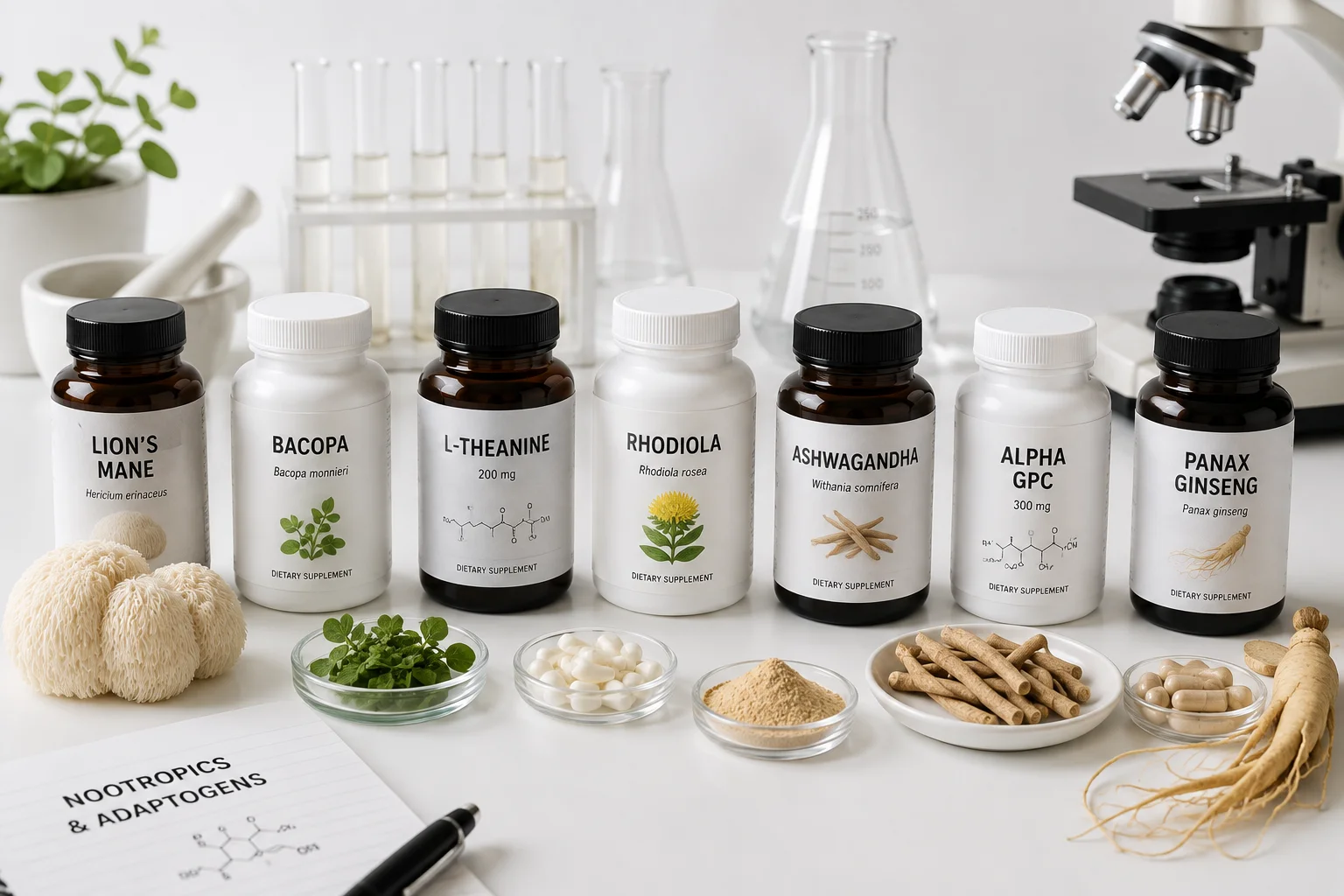
Among the hundreds of botanical extracts and isolated amino acids available, L-Theanine, Bacopa Monnieri, and Rhodiola Rosea stand out due to their robust clinical backing. These compounds do not artificially force the central nervous system into overdrive. Instead, they operate as adaptogens and modulators, helping the brain manage stress, maintain attention, and support memory retention.
Core Mechanisms: The Science of Cognitive Support
To understand how natural nootropics function, it is essential to look at how the brain handles stress and attention. The central nervous system relies on a delicate balance of neurotransmitters—chemical messengers like dopamine, serotonin, and GABA (gamma-aminobutyric acid). Chronic stress disrupts this balance, elevating cortisol levels through the hypothalamic-pituitary-adrenal (HPA) axis, which impairs focus and damages neural plasticity.
Adaptogenic and nootropic compounds work by modulating these pathways. They can promote the production of calming neurotransmitters, defend neurons against oxidative stress, or optimize blood flow to the cerebral cortex, providing the biological foundation necessary for sustained mental clarity.
Clinical Evidence & Health Benefits
Scientific literature provides a clear framework for how these specific natural compounds influence human cognition and emotional well-being.
L-Theanine: Relaxed Alertness
L-Theanine is a non-protein amino acid found primarily in green tea (Camellia sinensis). Its primary mechanism of action involves crossing the blood-brain barrier to increase the production of GABA, serotonin, and dopamine. This promotes the generation of alpha brain waves, which are associated with a state of "relaxed alertness"—focus without the jittery physical side effects of standard stimulants.
Clinical data highlights its synergistic relationship with caffeine. A well-documented study on human cognitive performance demonstrated that a combination of L-theanine and caffeine significantly improved both task-related attention and target recognition compared to a placebo. This makes it an ideal compound for tasks requiring sustained concentration.
Bacopa Monnieri: Memory and Neuroplasticity
Bacopa Monnieri is a foundational herb in traditional Ayurvedic medicine, heavily researched for its neuroprotective properties. Its active compounds, known as bacosides, aid in the repair of damaged neurons and promote the growth of new dendrites, facilitating better communication between brain cells.
Unlike fast-acting stimulants, Bacopa requires chronic administration to yield structural cognitive benefits. A comprehensive meta-analysis of randomized controlled trials confirmed that Bacopa extract has the potential to improve cognition, particularly speeding up attention and enhancing memory free recall in adults over a period of 8 to 12 weeks.
Rhodiola Rosea: Combating Mental Fatigue
Rhodiola Rosea is an adaptogenic herb that grows in cold, mountainous regions. It is specifically utilized to combat physical and mental fatigue, particularly in individuals experiencing chronic stress or burnout. Rhodiola works by interacting with the HPA axis to prevent the excessive release of cortisol.
The active constituents, rosavins and salidroside, help sustain energy metabolism within cellular mitochondria. Clinical evaluations have shown that Rhodiola extract (specifically the SHR-5 extract) exerts an anti-fatigue effect that increases mental performance, particularly the ability to concentrate, while decreasing the cortisol response to awakening stress in individuals with burnout syndrome.
Practical Application & Dosage Guidelines
Integrating these nootropics effectively requires understanding their pharmacokinetics and correct dosing strategies:
- L-Theanine: Generally taken in doses of 100mg to 200mg. For enhanced focus, it is frequently paired with caffeine in a 2:1 ratio (e.g., 200mg L-theanine with 100mg caffeine). It works acutely, usually within 30 to 45 minutes of ingestion.
- Bacopa Monnieri: Standardized extracts (containing at least 50% bacosides) are recommended at 300mg daily. Because it is fat-soluble, it should be consumed with a meal. Results are cumulative, meaning it must be taken daily for 8 to 12 weeks to observe significant memory benefits.
- Rhodiola Rosea: Effective doses range from 200mg to 400mg per day of a standardized extract (typically 3% rosavins and 1% salidroside). Because of its mild stimulatory properties, it is best taken in the morning to prevent sleep disruption.
Conclusion
No supplement can replace the cognitive benefits of adequate sleep, regular physical exercise, and a balanced diet. However, when the foundational pillars of health are established, natural nootropics offer scientifically validated support. L-theanine provides immediate refinement of focus, Bacopa Monnieri supports long-term structural memory, and Rhodiola Rosea acts as a buffer against stress-induced mental fatigue. Utilizing these compounds correctly can significantly support sustained mental health and cognitive performance.

The Health Findings Lab Research Team is a dedicated group of health writers, data analysts, and editorial reviewers. Operating under strict, evidence-based editorial guidelines, the team synthesizes peer-reviewed clinical literature to provide objective insights. Our collaborative approach ensures that every review prioritizes verifiable efficacy and manufacturing transparency over marketing hyperbole.