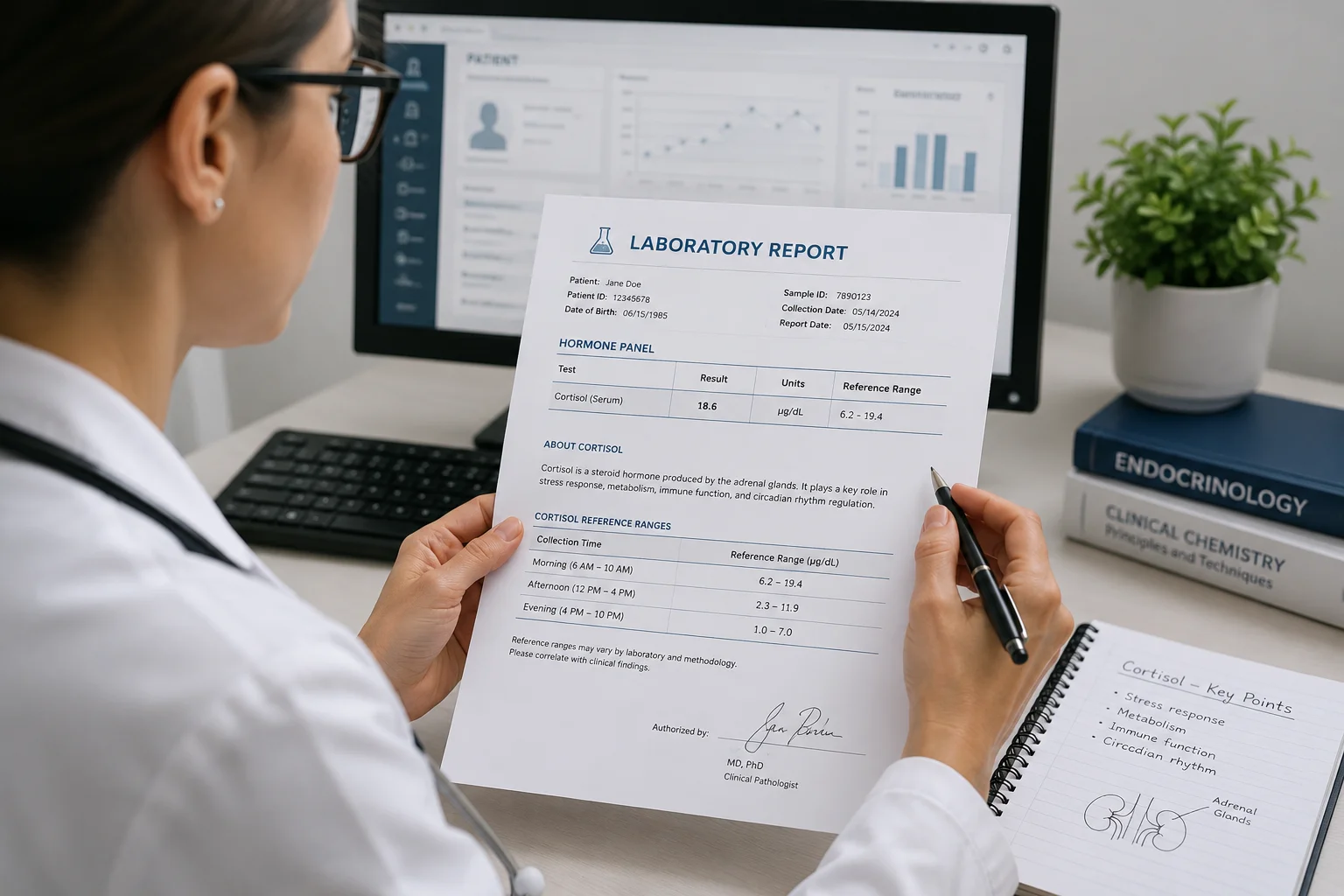
Understanding the Chronic Stress Epidemic
Chronic stress is a pervasive physiological challenge in modern society, influencing metabolic, cognitive, and cardiovascular health. At the center of the physiological stress response is cortisol, a primary glucocorticoid synthesized by the adrenal glands. Accurate assessment of this hormone provides critical data regarding systemic allostatic load—the cumulative biological wear and tear resulting from chronic overactivity of the autonomic nervous system.
The Science: How Cortisol Testing Works
The hypothalamus-pituitary-adrenal (HPA) axis governs cortisol production. Under normal physiological conditions, cortisol secretion follows a diurnal rhythm, peaking in the early morning and gradually declining toward the evening. When subjected to chronic psychological or physical stressors, the HPA axis can become dysregulated, leading to chronically elevated or suppressed cortisol output.
08:00 AM ████████████████ (Peak)
12:00 PM ██████████ (Declining)
04:00 PM ██████ (Low)
10:00 PM ██ (Nadir/Trough)
Clinical assessment relies on multiple biological matrices. Blood (serum) tests evaluate systemic cortisol at a specific moment, primarily reflecting acute states. Salivary testing measures unbound, biologically active cortisol and is highly effective for mapping the diurnal curve without the stress of venipuncture. Furthermore, emerging assays utilize hair samples to quantify retrospective systemic cortisol exposure over several months, offering a longitudinal view of chronic stress adaptation.
Clinical Evidence & Health Benefits of Monitoring Cortisol
Maintaining physiological cortisol homeostasis is linked to several positive health outcomes. Clinical monitoring may assist in optimizing these baseline processes:
- Supports metabolic function: Balanced glucocorticoid levels promote appropriate glucose synthesis and fat utilization, which may aid in maintaining healthy metabolic parameters.
- Promotes immune health: Regulated cortisol secretion supports natural inflammatory responses and systemic immune surveillance mechanisms.
- Aids in sleep regulation: A properly functioning diurnal cortisol rhythm is intricately tied to circadian biology, supporting optimal sleep architecture and wakefulness.
- Supports cardiovascular homeostasis: Chronic HPA axis activation is linked to cardiovascular strain; thus, monitoring and modulating stress mediators supports baseline vascular health.
Clinical Indicators: Who Should Consider Cortisol Testing?
Monitoring HPA axis function may provide actionable data for individuals experiencing signs of autonomic or metabolic dysregulation. Clinical indicators that warrant baseline testing include:
- Persistent fatigue: Unexplained lethargy that does not resolve with adequate rest.
- Poor sleep quality: Difficulty initiating or maintaining sleep, often linked to elevated evening cortisol.
- Unexplained weight gain: Specifically central adiposity associated with glucocorticoid excess.
- High occupational stress: Chronic allostatic load from demanding work environments.
- Shift workers: Individuals with disrupted circadian rhythms and inverted sleep-wake cycles.
- Athletic overtraining: Elite or high-volume athletes experiencing performance decline and systemic fatigue.
Important Considerations & Usage
Accurate cortisol quantification requires strict adherence to timing protocols. Because serum cortisol typically peaks around 8:00 AM, morning blood draws are standard for baseline assessments. Patients must account for exogenous factors that influence diagnostic results, including intense exercise, caffeine consumption, shift work, and medications such as oral contraceptives or exogenous corticosteroids.
Corticosteroid-binding globulin (CBG) levels can also skew total serum cortisol readings, making free cortisol assessments in saliva or precise liquid chromatography-tandem mass spectrometry (LC-MS/MS) blood testing highly valuable for clinical accuracy. For individuals seeking reliable, direct-to-consumer testing options, platforms like HealthLabs.com provide accessible avenues for baseline data collection.
Safety Profile & Potential Side Effects
While the diagnostic tests themselves present minimal physical risk, there are inherent challenges in biomarker interpretation. Venipuncture for blood testing carries a minor risk of bruising, lightheadedness, or localized infection. The primary clinical risk involves misinterpretation of isolated data points; acute stress from the blood draw itself can temporarily elevate cortisol, potentially confounding results.
Individuals with suspected Addison disease, Cushing syndrome, or severe endocrine disorders should avoid relying solely on independent testing and must undergo dynamic diagnostic protocols under direct medical supervision.
Frequently Asked Questions (FAQ)
Is cortisol highest in the morning?
Under normal physiological conditions, cortisol levels peak within 30 to 45 minutes of waking (known as the cortisol awakening response) and gradually decline throughout the day, reaching their lowest point around midnight.
Is saliva cortisol more accurate than blood testing?
Salivary and blood tests measure different metrics. Saliva measures unbound, free cortisol (the biologically active form), making it highly accurate for assessing cellular exposure and mapping the diurnal curve. Blood (serum) measures total cortisol, which includes protein-bound inactive forms.
Can chronic stress elevate cortisol permanently?
Chronic HPA axis activation can lead to sustained elevated cortisol over long periods. However, prolonged chronic stress can eventually result in HPA axis dysregulation, sometimes manifesting as a blunted or suppressed cortisol response rather than a permanent elevation.
Does caffeine affect cortisol testing?
Yes. Caffeine is a potent central nervous system stimulant that can acutely elevate cortisol secretion. Patients are typically advised to abstain from caffeine prior to morning baseline collections.
Can poor sleep change cortisol levels?
Sleep deprivation acts as a physiological stressor. Insufficient sleep or disrupted circadian rhythms can elevate evening cortisol levels and blunt the normal morning peak, contributing to metabolic and cognitive disturbances.
Conclusion & Recommendation
Assessing systemic cortisol exposure provides actionable data regarding neuroendocrine function and chronic stress load. While acute stress triggers a necessary physiological survival cascade, chronic allostatic overload demands strategic intervention. Monitoring biomarkers establishes a measurable baseline, allowing for targeted lifestyle modifications. For those evaluating their current HPA axis function, obtaining a precise laboratory assessment through HealthLabs.com offers a standardized starting point for informed health management.
Scientific References
- Suryawanshi R, Sharma S. Cortisol as a stress biomarker: analytical perspectives and challenges. Clin Chim Acta. 2026.
- Lee DY, Kim E, Choi MH. Technical and clinical aspects of cortisol as a biochemical marker of chronic stress. BMB Rep. 2015.
- Russell E, et al. Hair cortisol as a biological marker of chronic stress: current status, future directions and unanswered questions. Psychoneuroendocrinology. 2012.

The Health Findings Lab Research Team is a dedicated group of health writers, data analysts, and editorial reviewers. Operating under strict, evidence-based editorial guidelines, the team synthesizes peer-reviewed clinical literature to provide objective insights. Our collaborative approach ensures that every review prioritizes verifiable efficacy and manufacturing transparency over marketing hyperbole.