Introduction
Botanical extraction isolates specific phytochemicals from raw plant material, creating a concentrated, shelf-stable liquid format known as a tincture. While commercial extracts dominate the market, crafting tinctures at home allows for precise control over ingredient quality, solvent ratios, and extraction duration. This process requires a foundational understanding of plant biology and solvent mechanics to ensure the final product retains its targeted active compounds.
Core Mechanisms / The Science
The extraction process relies on a solvent—traditionally referred to as a menstruum—acting upon the plant's matrix. Different phytochemicals require specific solvents for optimal degradation of the plant cell wall and subsequent suspension.
Ethanol is the standard menstruum in botanical extraction due to its biphasic nature. It effectively extracts both water-soluble compounds (like polysaccharides and glycosides) and alcohol-soluble compounds (such as resins, alkaloids, and essential oils). When the menstruum permeates the cellular structure, it forces the cell walls to break down, releasing the internal compounds into the liquid phase. The high alcohol content also denatures enzymatic activity, preserving the chemical integrity of the extract over time.
Health Benefits
Standardized herbal tinctures are utilized to support various physiological functions, depending on the botanical used. Clinical literature, such as pharmacological records indexed via the National Institutes of Health, indicates that properly extracted phytochemicals offer several verifiable applications:
- Nervous System Regulation: Adaptogenic extractions support the body's natural stress response, promoting balanced cortisol levels.
- Digestive Function: Bitter botanical extracts stimulate the vagus nerve, aiding in the natural production of digestive enzymes and bile.
- Antioxidant Support: Polyphenol-rich tinctures help neutralize free radicals, supporting cellular health and mitigating oxidative stress.
Practical Application / Dosage
Creating an effective tincture requires moving beyond visual estimations to the standardized Weight-to-Volume (W:V) method. This approach ensures consistency and accurate dosing.
The 1:5 Extraction Ratio
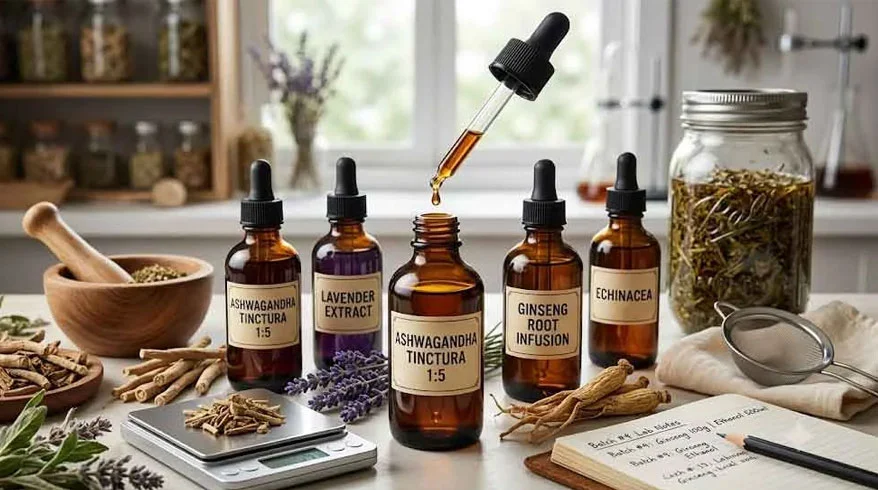
The standard industry ratio for dried botanical material is 1:5. This signifies one part plant material (by weight in grams) to five parts menstruum (by volume in milliliters). For example, 100 grams of dried herb requires 500 milliliters of liquid menstruum.
Selecting the Solvent
- Standard Extraction (40-50% ABV): Ideal for most dried herbs, capturing a balance of water and alcohol-soluble compounds.
- High-Proof Extraction (70-95% ABV): Required for dense, resinous materials like myrrh or propolis, which naturally repel water.
The Maceration Process
- Weigh the dried botanical material and place it in a sterilized amber glass jar.
- Measure the appropriate volume of menstruum and pour it over the herbs, ensuring complete submersion to prevent oxidation.
- Seal the jar tightly and store it in a cool, dark location for four to six weeks. Agitate the jar gently every two days to facilitate solvent saturation.
- Once maceration is complete, strain the liquid through an unbleached muslin cloth, pressing firmly to extract all residual solvent.
- Store the final liquid in amber glass dropper bottles away from direct sunlight.
Conclusion
At-home botanical extraction is a precise application of solvent chemistry and plant biology. By utilizing proper weight-to-volume ratios and selecting the correct menstruum for the targeted phytochemicals, individuals can produce standardized, highly active herbal tinctures. Consistency in methodology ensures a reliable output that supports targeted health applications safely and efficiently.

The Health Findings Lab Research Team is a dedicated group of health writers, data analysts, and editorial reviewers. Operating under strict, evidence-based editorial guidelines, the team synthesizes peer-reviewed clinical literature to provide objective insights. Our collaborative approach ensures that every review prioritizes verifiable efficacy and manufacturing transparency over marketing hyperbole.