Introduction
Walk into any American grocery store and you will find protein-packed everything—cereals, chips, ice cream, even water. The message is loud and clear: more protein equals a leaner, stronger you. But beneath the marketing noise, the science tells a more nuanced story.
In the U.S., where roughly two in three adults carry excess weight, high-protein diets have become a go-to strategy for fat loss, muscle maintenance, and blood sugar control. The real questions are not whether protein matters—it absolutely does—but how much is actually useful, what happens inside your body when you bump it up, and who might be walking into trouble. This article cuts through the hype and looks at what randomized trials, metabolic studies, and long-term data actually say. If you are looking at the bigger picture of dropping pounds without crash diets or prescriptions, high-protein eating is one of the most evidence-backed levers you can pull within a broader sustainable and natural weight loss plan.
What Happens Inside Your Body on a High-Protein Diet
High-protein diets work through a few well-documented biological pathways. You do not need a PhD to grasp them, but understanding the basics helps you separate fact from fitness-influencer fiction.
Your Body Burns More Calories Digesting Protein
Every time you eat, your body spends energy breaking that food down. This is called the thermic effect of food, and protein is the heavyweight champion of the group. Your body burns roughly 20–30% of protein calories just processing it. For carbs, that number is 5–10%. For fat, it is closer to zero. That means if you eat 100 calories of chicken breast, your net calorie intake is effectively lower than 100 calories of olive oil—not because the label lies, but because your metabolic machinery works harder on protein. Moon & Koh, J Obes Metab Syndr (2020)
Protein Quiets Your Hunger Hormones
Ever notice how a steak or a big bowl of Greek yogurt keeps you full for hours? That is not willpower. It is hormones. Protein triggers a surge of satiety signals—GLP-1, CCK, and PYY—while dialing down ghrelin, the hormone that screams 'eat now.' In head-to-head studies, people eating higher-protein meals report less hunger and spontaneously eat fewer calories later in the day, even when they are not trying to diet. Lim et al., Nutrients (2022)
It Protects Muscle When You Are Losing Weight
When you cut calories, your body does not just burn fat. It can also break down muscle for fuel. That is a problem because muscle is your metabolic engine—the more you have, the more calories you burn at rest. Higher protein intake acts like a shield for lean tissue. A meta-analysis of 24 randomized trials found that dieters on higher-protein plans held onto significantly more muscle—and therefore maintained a higher metabolism—than those on standard-protein diets. Moon & Koh, J Obes Metab Syndr (2020)
The Ketone Connection (Sort Of)
Some research suggests that very high protein, lower-carb eating can nudge your body to produce ketones—specifically beta-hydroxybutyrate—which may further suppress appetite. But this is not the same as a keto diet. For most people eating a standard high-protein plan with moderate carbs, ketone levels stay modest and the appetite effect is secondary to the hormone and thermic effects above.
What the Clinical Trials Actually Show
Here is where rubber meets road. The benefits below come from human studies, not rat labs or theory.
- Real weight and fat loss: In a six-month randomized trial, participants getting 25% of their calories from protein lost about 8 pounds more body weight—and 7 pounds more pure fat—than those eating 12% protein. Both groups ate freely; the high-protein group simply got fuller faster and ate less overall. Moon & Koh, J Obes Metab Syndr (2020)
- Keeping the weight off: Losing weight is hard; keeping it off is harder. Trials lasting 6–12 months show that higher protein intake helps prevent the dreaded rebound, likely because it preserves metabolism and keeps hunger in check after the diet ends. Moon & Koh, J Obes Metab Syndr (2020)
- Better body composition: On a calorie-restricted diet, high protein helps you lose fat while hanging onto muscle. The result is a leaner physique and a scale number that actually means something. Moon & Koh, J Obes Metab Syndr (2020)
- Steadier blood sugar: Protein slows stomach emptying, which flattens the blood sugar spike after meals. The GLP-1 boost from protein also helps regulate insulin and glucagon in a glucose-dependent way—similar mechanics to some popular weight-loss medications, though far less potent. Lim et al., Nutrients (2022)
- Improved heart markers: Some studies note drops in triglycerides and blood pressure on high-protein plans, though these benefits usually ride shotgun with overall weight loss rather than protein alone.
How Much Protein Should You Actually Eat?
The U.S. government recommends 0.8 grams of protein per kilogram of body weight daily—about 56 grams for a 154-pound adult. That is the minimum to prevent deficiency, not the optimal amount for fat loss or muscle. Wu, Food Funct (2016)
In clinical studies, 'high protein' usually means 1.2 to 1.6 grams per kilogram per day. For a 180-pound person, that translates to roughly 100–130 grams daily. Some research pushes toward 2.0 g/kg for serious strength athletes, but that is the upper edge and not necessary for the average person. Wolfe et al., Adv Nutr (2017)
Practical rules to make it work:
- Spread it out: Your body can only use so much protein at once for muscle building. Aim for 20–30 grams per meal, three to four times a day, rather than dumping 80 grams into dinner and calling it done.
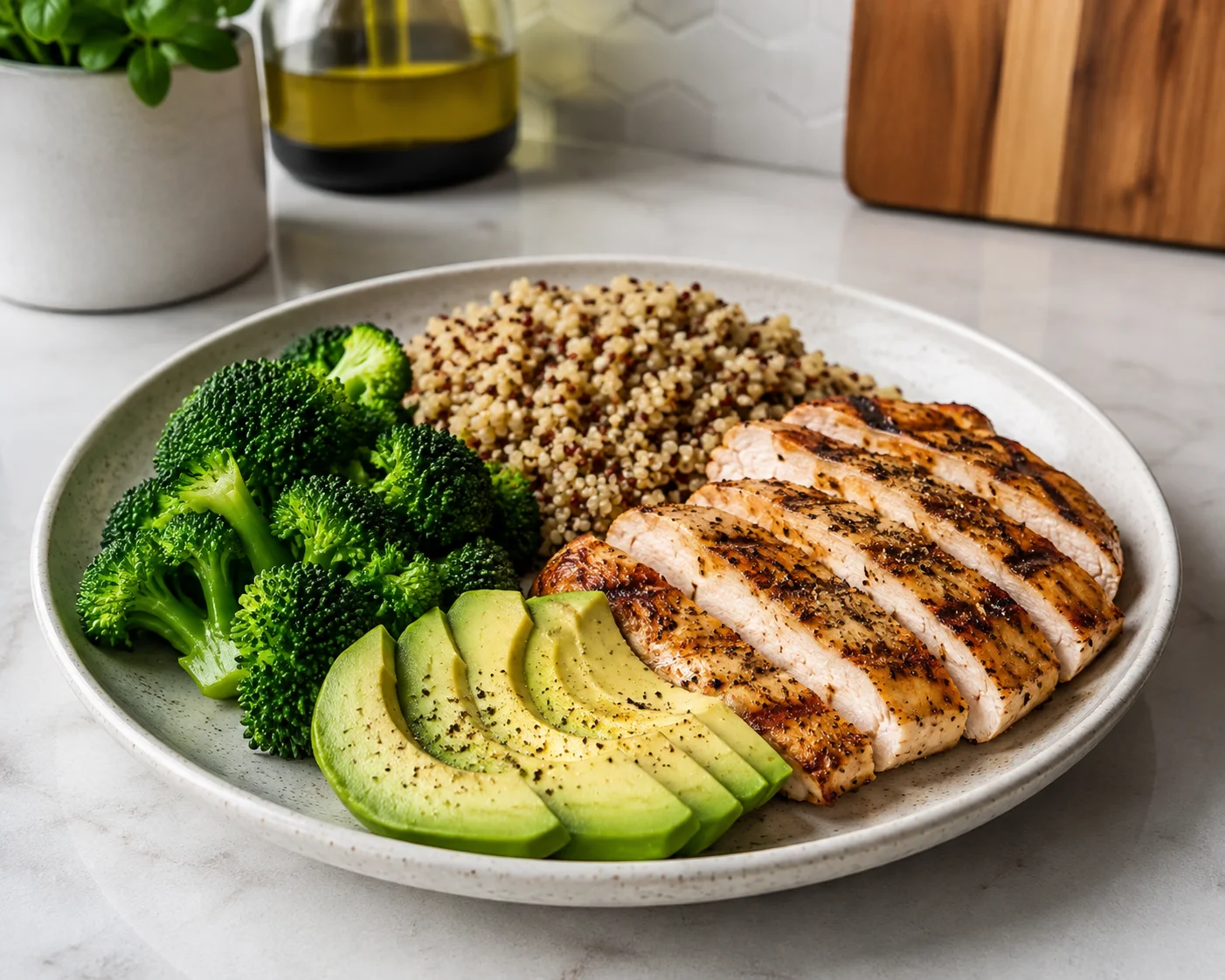
- Prioritize quality sources: Fish, chicken breast, eggs, Greek yogurt, beans, lentils, tofu, and tempeh deliver protein without the saturated fat and sodium bomb of bacon and processed deli meats.
- Adjust for age and activity: If you are over 50, bumping toward 1.0–1.2 g/kg helps fight the natural muscle loss that comes with aging. If you lift weights regularly, 1.2–1.7 g/kg is the sweet spot.
- Calculate from a healthy weight: If you carry significant excess weight, base your protein target on your goal body weight or adjusted body weight—not your current scale number—to avoid massively overeating protein.
Safety: What Could Go Wrong?
High-protein diets are safe for most healthy adults, but they are not risk-free for everyone. Here is the honest breakdown.
The Kidney Question
This is the big one. In healthy people, eating more protein temporarily raises kidney filtration rate—a phenomenon called hyperfiltration—but research shows no kidney damage over 6–12 months. Your kidneys are built to handle fluctuations.
The problem starts if your kidneys are already compromised. In people with chronic kidney disease (CKD) or even mild renal insufficiency, sustained high protein intake has been linked to faster decline in kidney function. The Nurses' Health Study found that in women with existing kidney issues, every extra 10 grams of daily protein was associated with a measurable drop in filtration rate. Observational data also tie heavy red and processed meat intake to higher CKD risk, while fish and plant proteins do not show the same association. Ko et al., J Am Soc Nephrol (2020)
Bottom line: healthy kidneys can handle high protein; damaged kidneys cannot.
Heart and Metabolic Risks
If your high-protein diet is built on cheeseburgers and pepperoni, you are not doing your arteries any favors. Diets heavy in red and processed meat tend to drive up LDL cholesterol and saturated fat intake, which raises cardiovascular risk. Very high protein over long periods—think 2+ g/kg for months on end—can also elevate blood urea nitrogen and dietary acid load, which may stress blood vessels and bone mineral balance over time. Ko et al., J Am Soc Nephrol (2020)
Digestive Gripes
Protein-heavy diets that slash carbs to near-zero often leave people constipated, headachy, and dealing with bad breath. The culprit is usually not the protein itself, but the lack of fiber and micronutrients that come from whole grains, fruits, and vegetables.
Who Should Think Twice
- Anyone diagnosed with CKD or reduced kidney function
- People born with one kidney or who have had a kidney removed
- Individuals with diabetes plus high blood pressure
- Anyone with a history of kidney stones, especially on meat-heavy plans
Conclusion: Is a High-Protein Diet Right for You?
For most Americans, bumping protein intake to 1.2–1.6 grams per kilogram of body weight is a sound, evidence-backed move for fat loss, muscle preservation, and appetite control. The mechanisms are real: your body burns more calories processing it, your hunger hormones calm down, and your muscle stays put even when you are eating fewer total calories.
But protein is not magic, and more is not always better. The source matters as much as the quantity. A diet built on grilled fish, legumes, eggs, and yogurt carries a very different health profile than one built on processed meat and protein bars. If you have any kidney concerns, are over 50 and noticing muscle loss, or are taking weight-loss medications, talk to your doctor or a registered dietitian before making a major shift. The science is solid—but only when applied to the right person, in the right amount, for the right reasons.

The Health Findings Lab Research Team is a dedicated group of health writers, data analysts, and editorial reviewers. Operating under strict, evidence-based editorial guidelines, the team synthesizes peer-reviewed clinical literature to provide objective insights. Our collaborative approach ensures that every review prioritizes verifiable efficacy and manufacturing transparency over marketing hyperbole.