Introduction
The oral hygiene routine has undergone a significant transition. The focus of consumers has shifted from mere mechanical brushing to a rigorous analysis of the chemistry of daily-use compounds. The dental structure faces a constant cycle of demineralization: dietary acids and bacterial metabolism byproducts dissolve enamel minerals, making it porous and highly susceptible to the development of carious lesions.
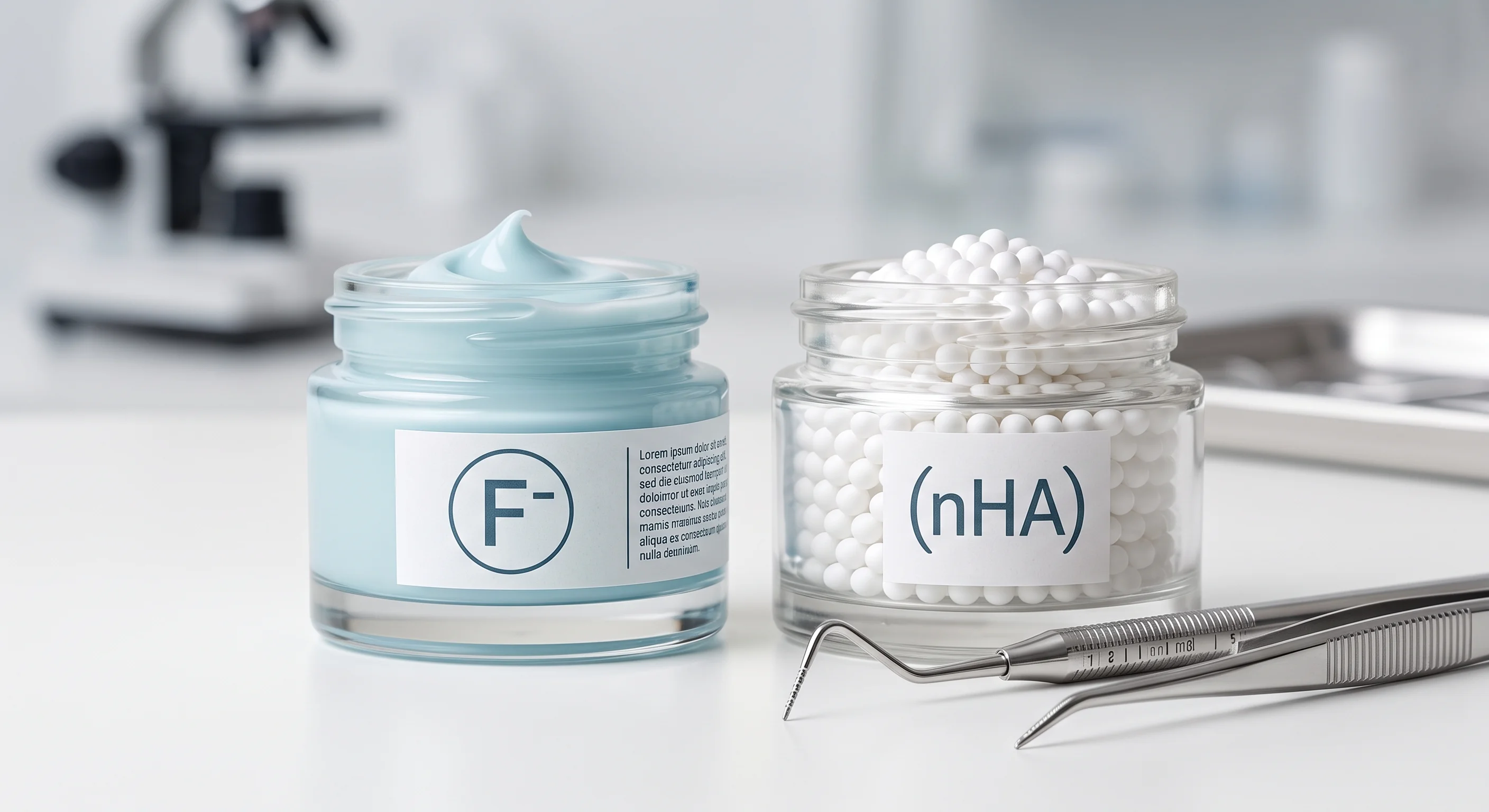
To combat this structural wear, dental science has established two primary intervention pathways. On one side, we have Fluoride, clinically recognized as the gold standard for decades. On the other, Nano-hydroxyapatite (nHA) emerges, a biomimetic alternative proposing a direct structural approach. The objective of this analysis is to evaluate the clinical efficacy of each compound based on solid scientific evidence, aiding in the selection of the appropriate remineralization agent.
The Gold Standard: How Does Fluoride Work?
Fluoride acts predominantly through an ion exchange process in the oral environment. When introduced into the oral cavity, the fluoride ion interacts with the calcium and phosphate naturally present in saliva. This chemical reaction replaces the original hydroxyapatite of the tooth with fluorapatite (clinical reference).
The main advantage of this chemical conversion is increased resistance to acid stress. While natural enamel begins to dissolve at a pH around 5.5, fluorapatite withstands pH drops to approximately 4.5. Despite its unquestionable efficacy, specific concerns drive the search for alternatives, such as the dose-dependent risk of dental fluorosis in pediatric patients who accidentally ingest toothpaste, and the growing consumer demand for non-synthetic ingredients.
The Biocompatible Challenger: What is (Nano)Hydroxyapatite (nHA)?
Synthetic hydroxyapatite has a robust scientific history, having been initially synthesized by NASA in the 1970s to help astronauts experiencing bone loss in microgravity environments. In the 1980s, the Japanese company Sangi Co. acquired the patent and introduced the compound into preventive dentistry.
The mechanism of nHA is strictly biomimetic. Human dental enamel is composed of approximately 97% hydroxyapatite by weight. Instead of triggering a chemical reaction to create a new mineral, hydroxyapatite nanoparticles fill the calcium-depleted micropores, physically integrating into the natural structure of the tooth. Clinical data highlight its operational properties:
- Support against carious lesions: Randomized clinical trials demonstrate that the efficacy of nHA in initial remineralization is statistically non-inferior to sodium fluoride (Amaechi et al., 2019).
- Dentin hypersensitivity relief: nHA acts through the deep mechanical occlusion of exposed dentinal tubules, reducing stimulus conduction to pulpal nerves in a superior manner to traditional agents (efficacy study).
- Absolute safety profile: Being the exact material that comprises bones and teeth, nHA is 100% biocompatible and devoid of systemic toxicity, eliminating risks upon ingestion.
Direct Analysis: Fluoride vs. Hydroxyapatite
| Feature | Fluoride | (Nano)Hydroxyapatite |
|---|---|---|
| Mechanism | Chemical reaction (forms fluorapatite) | Biomimetic structural filling |
| Acid Resistance | Very High | Moderate to High |
| Sensitivity Relief | Low to Moderate | High (direct tubular occlusion) |
| Ingestion Safety | Toxicity risk (dose-dependent) | Completely safe (biocompatible) |
| Market Cost | Highly Accessible | Premium / Higher |
Decision Guide: Which is Best for Your Profile?
Selecting the appropriate therapeutic agent depends on assessing the clinical vulnerabilities of each patient. Consider the profiles below to direct your choice:
- Profile A: The High Caries Risk Consumer. For individuals with a clinical history of multiple active carious lesions, a diet with high sucrose frequency, or significant budget restrictions, Fluoride remains the primary recommendation due to its extremely high resistance to sharp pH drops.
- Profile B: The Sensitive and Natural. Patients who report acute pain when consuming cold foods, guardians of young children in the brushing training phase (with ingestion risk), or consumers adept at biocompatible formulations will find Nano-hydroxyapatite the ideal choice.
- Profile C: The Best of Both Worlds. Recent literature points out that advanced formulations combining Fluoride and Hydroxyapatite can act synergistically, promoting both acid-resistant fluorapatite formation and nHA microfissure sealing.
Conclusion
Dental enamel is an acellular tissue; it lacks the biological capacity for autonomous regeneration. Therefore, restoring structural integrity requires a continuous supply of external raw materials. Both discussed ingredients provide the necessary substrate through distinct methodological pathways, and both possess robust clinical validation. To receive more rigorous clinical analyses and discover which therapeutic interventions are supported by scientific data, subscribe to the Health Findings Lab newsletter.

The Health Findings Lab Research Team is a dedicated group of health writers, data analysts, and editorial reviewers. Operating under strict, evidence-based editorial guidelines, the team synthesizes peer-reviewed clinical literature to provide objective insights. Our collaborative approach ensures that every review prioritizes verifiable efficacy and manufacturing transparency over marketing hyperbole.