When Ringing in the Ears Follows a Stressful Week
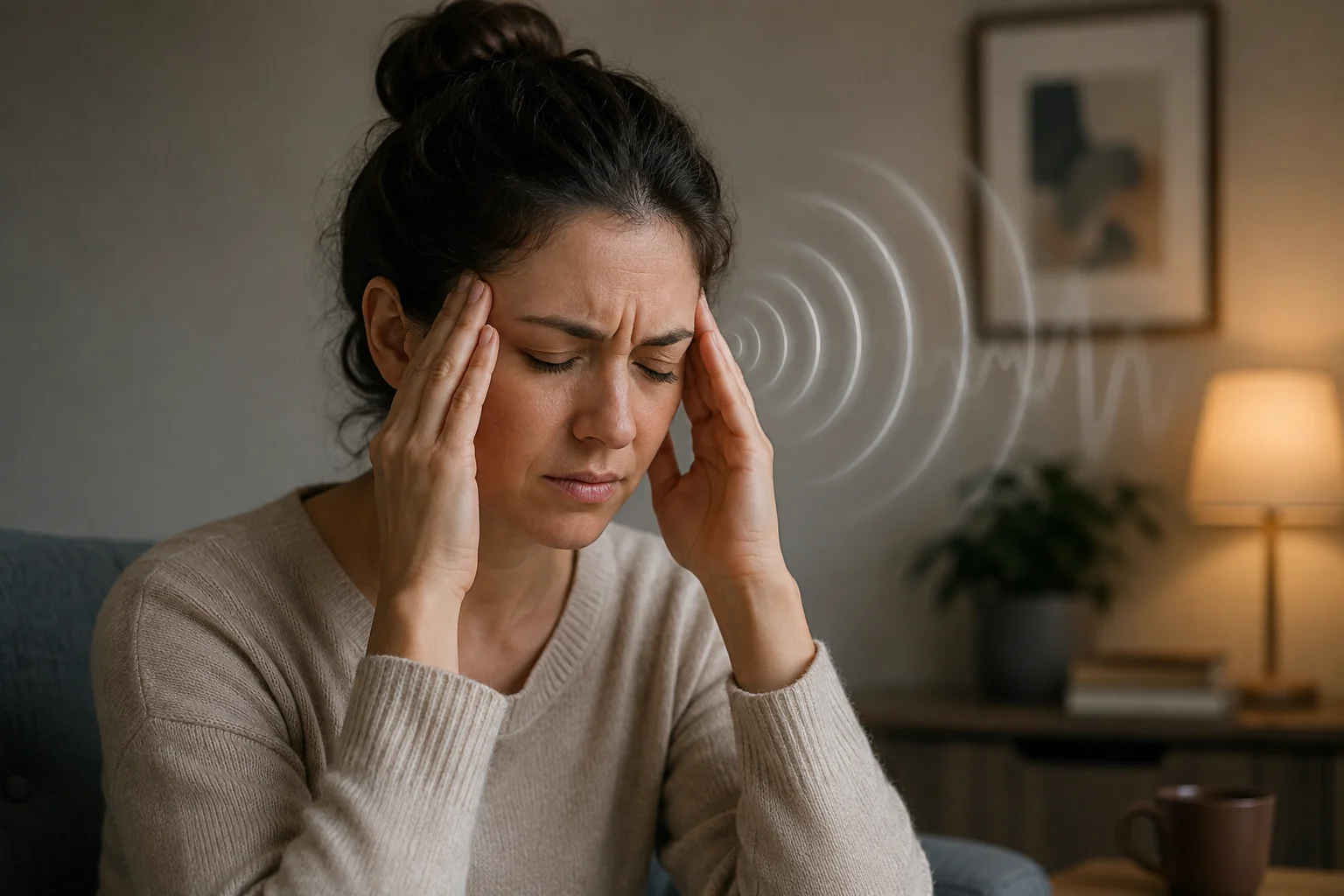
Plenty of people with tinnitus notice a pattern: the ringing, buzzing, or hissing gets louder during deadlines, family conflict, or sleepless nights, then eases off once life calms down. That pattern isn't just in your head, at least not in the dismissive sense. Researchers have spent nearly two decades studying whether the body's main stress hormone, cortisol, plays a measurable role in how tinnitus is generated and perceived.
The short answer is that stress doesn't appear to "cause" tinnitus in the way a loud concert or an ear infection can. But a growing body of research suggests that chronic stress and dysregulated cortisol may shape how the brain processes phantom sound, how intrusive it feels, and how well the nervous system recovers once tinnitus starts. Here's what the science actually shows, and where it stops.
How Stress and Cortisol May Influence Tinnitus
Cortisol is released by the hypothalamic-pituitary-adrenal (HPA) axis, the body's central stress-response system. In short bursts, cortisol helps mobilize energy and sharpen focus. Under chronic stress, though, this system can become dysregulated, producing either an exaggerated or a blunted hormonal response to new stressors.
Tinnitus itself is now understood less as an "ear problem" and more as a brain-processing phenomenon. Most cases begin with some form of damage or change in the auditory pathway, but the ongoing perception of the phantom sound involves brain regions tied to attention, emotion, and stress regulation, including the limbic system and auditory cortex. Because those same circuits are wired into the HPA axis, chronic stress hormones may amplify how loud or intrusive tinnitus feels, even if they aren't what triggered it in the first place.
This is also why clinicians increasingly look at cortisol patterns, not just as a curiosity, but as a measurable window into a patient's overall stress burden. If you want a deeper look at how this is measured in practice, our guide to cortisol testing and clinical biomarkers of chronic stress walks through what these lab panels can and cannot tell you about neuroendocrine function.
What the Research Actually Shows
- A frequently cited study out of the Centre for Studies on Human Stress found that people with tinnitus showed a blunted cortisol response to a standardized psychosocial stress test, compared with people without tinnitus, suggesting an altered HPA-axis pattern rather than simple overproduction of cortisol (Hébert & Lupien, Neuroscience Letters).
- A follow-up dexamethasone-suppression study reported similar delayed and blunted cortisol responses in tinnitus participants, reinforcing the idea of an HPA-axis anomaly linked to the condition (PMC, HPA axis and tinnitus).
- A 2022 study measuring hair cortisol, which reflects stress exposure over several months rather than a single moment, found that higher hair-cortisol levels were associated with higher perceived tinnitus loudness in chronic tinnitus patients (Scientific Reports, hair-cortisol and tinnitus).
- Separate laboratory research shows that acute noise exposure can shift both cortisol levels and subjective tinnitus intensity at the same time, hinting at a feedback loop between external stressors, the HPA axis, and symptom perception.
- Clinical groups such as the American Tinnitus Association report that stress and anxiety are among the most commonly self-reported triggers for tinnitus flare-ups, even though the underlying biology is still being mapped.
Taken together, this evidence points toward an association, not a simple cause-and-effect chain. Stress and cortisol dysregulation appear linked to how tinnitus is experienced and how distressing it becomes, rather than acting as a standalone trigger in every case.
Managing Stress-Related Tinnitus: Practical Considerations
Because the stress-tinnitus relationship seems to run in both directions, tinnitus can raise stress, and stress can make tinnitus feel louder, breaking that loop is often a more realistic goal than trying to eliminate the sound entirely. A few approaches that are commonly recommended by hearing specialists and supported by clinical experience include:
- Sleep hygiene: Tinnitus is frequently reported as more noticeable at night, when there's less background noise and cortisol naturally follows a circadian rhythm. Consistent sleep and wind-down routines may help.
- Sound enrichment: Low-level background noise, fans, white noise machines, or masking apps, can reduce the contrast between silence and the tinnitus signal.
- Cognitive behavioral therapy (CBT): CBT is among the most studied psychological approaches for tinnitus-related distress and is often recommended alongside audiologic care.
- Stress-reduction practices: Diaphragmatic breathing, progressive muscle relaxation, and regular physical activity are frequently suggested by audiologists to help regulate the nervous system's baseline stress load.
- Limiting stimulants: Caffeine and nicotine can heighten physiological arousal for some people, which may make tinnitus feel more prominent during already stressful periods.
The American Tinnitus Association maintains an extensive library of patient-facing tools and coping strategies that go beyond what's covered here.
When Tinnitus May Signal Something Beyond Stress
Stress-related tinnitus is typically bilateral (both ears), fluctuates with emotional state, and doesn't come with other neurological symptoms. Certain patterns, however, warrant a prompt evaluation by a physician or audiologist rather than a stress-management routine alone:
- Tinnitus in only one ear, especially if it started suddenly.
- A rhythmic, pulsing sound that matches your heartbeat (pulsatile tinnitus).
- Sudden hearing loss accompanying the tinnitus.
- Dizziness, vertigo, or balance problems alongside the ringing.
- Tinnitus following a head injury or that develops after starting a new medication.
These presentations can point to causes unrelated to stress, from earwax blockage to vascular or neurological issues, and are outside the scope of stress management. The National Institute on Deafness and Other Communication Disorders (NIDCD) outlines these red-flag symptoms in more detail and is a reliable starting point before any self-directed approach.
The Bottom Line
Current research doesn't support the idea that stress alone generates tinnitus out of nowhere. What it does support is a measurable relationship between chronic stress, HPA-axis function, and how loud, persistent, or distressing tinnitus feels once it's present. For people whose symptoms clearly track with stressful periods, addressing the underlying stress load, sometimes starting with objective lab measures like cortisol testing, may be a more useful entry point than chasing the ringing itself. As always, any new or changing tinnitus symptom is worth discussing with a healthcare provider or audiologist before assuming stress is the whole story.

The Health Findings Lab Research Team is a dedicated group of health writers, data analysts, and editorial reviewers. Operating under strict, evidence-based editorial guidelines, the team synthesizes peer-reviewed clinical literature to provide objective insights. Our collaborative approach ensures that every review prioritizes verifiable efficacy and manufacturing transparency over marketing hyperbole.