Search interest in "how to read nutrition labels" has spiked this year, and it's not a coincidence. In January 2026, the U.S. Department of Health and Human Services and the USDA released updated Dietary Guidelines for Americans that raised protein targets to 1.2–1.6 grams per kilogram of body weight per day, up from the longstanding 0.8 g/kg minimum. For a 154-pound adult, that shift moves the daily target from roughly 56 grams to well over 100 grams.
That's a meaningful jump, and it lands right as millions of people are already pulling up nutrition calculators for Chipotle, Chick-fil-A, Taco Bell, and Chicken Salad Chick before they order. This article breaks down what the new protein guidance actually means, how to read a nutrition label (fast food or packaged) to hit it, and where the evidence gets murkier than the headlines suggest.
The Science: Why Protein Targets Just Changed
Protein is built from amino acids, nine of which the body cannot synthesize and must get from food. The original 0.8 g/kg Recommended Dietary Allowance, set in 2005, was calculated as the minimum intake needed to prevent a nitrogen-balance deficiency in a sedentary adult — not an optimal intake for body composition, satiety, or healthy aging.
The 2025–2030 Dietary Guidelines for Americans update draws on a systematic review of randomized controlled trials comparing higher-protein (1.2–1.6 g/kg/d) diets against lower-protein (0.8–1.1 g/kg/d) diets during weight management. Higher intakes were consistently linked to better preservation of lean muscle mass during calorie restriction and greater satiety per calorie consumed, largely because protein takes more metabolic energy to digest than carbohydrate or fat and blunts appetite-driving hormones more effectively.
Worth noting: research summarized by the Harvard T.H. Chan School of Public Health points out that many American adults are already eating within or above the new range, and that excess protein beyond the body's needs is simply converted and stored as fat, not "wasted" as muscle-building material.
Clinical Evidence & Potential Benefits of Meeting Protein Targets
- Muscle preservation: Adequate protein intake, especially combined with resistance training, is linked to better retention of lean mass during weight loss and aging.
- Appetite regulation: Higher-protein meals may support satiety and reduce spontaneous snacking compared to equal-calorie, lower-protein meals.
- Bone and metabolic health: Adequate protein intake is associated with maintenance of bone mineral density, particularly in older adults at risk of sarcopenia.
- Blood sugar management: Pairing protein with carbohydrates may help moderate post-meal glucose spikes for some individuals, though this varies by overall diet quality.
- Recovery support: Protein intake distributed across meals is linked to improved muscle protein synthesis in physically active adults.
How to Actually Read a Nutrition Label for Protein
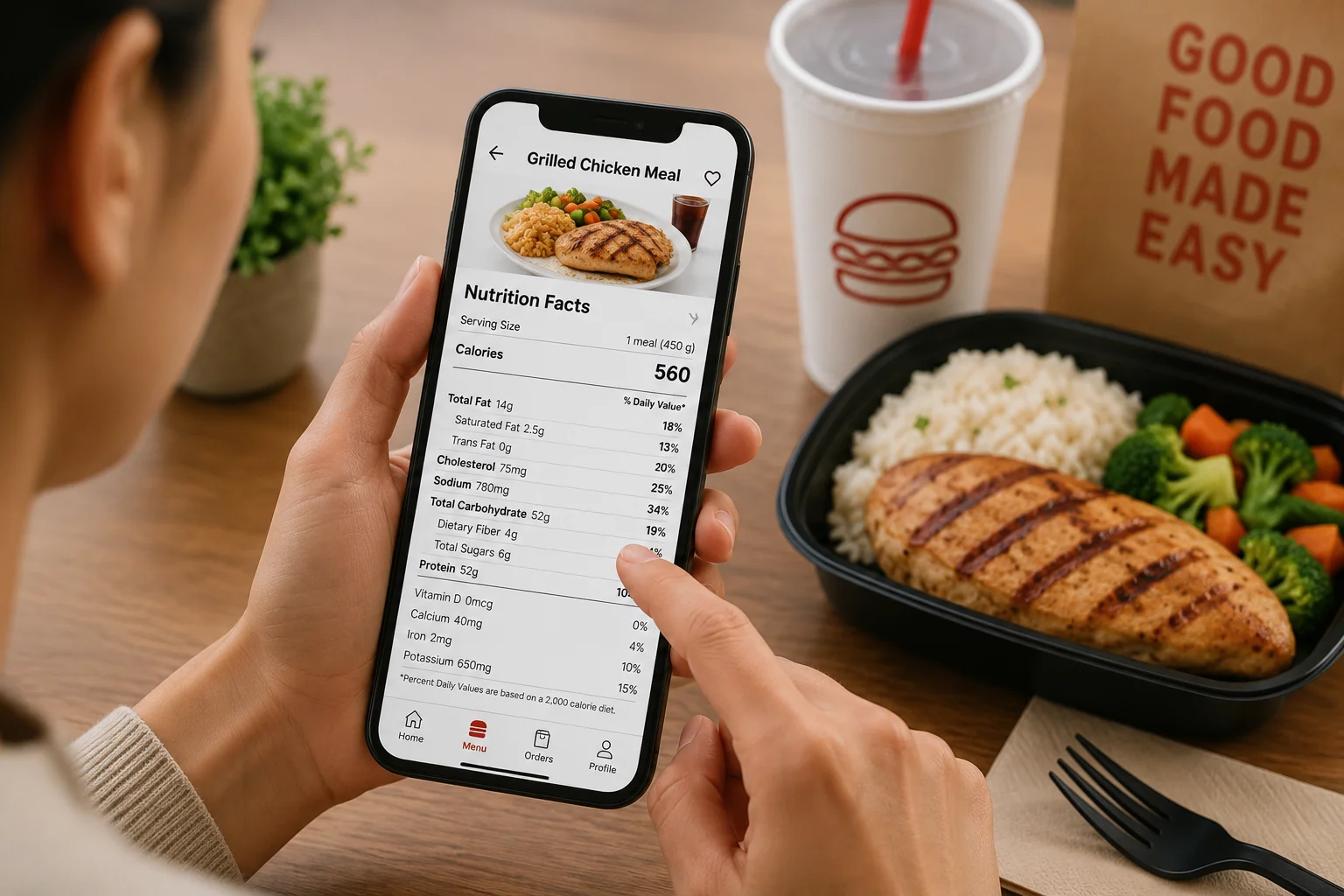
Whether you're scanning a packaged food Nutrition Facts label or a fast-food nutrition calculator, three numbers matter more than the marketing copy on the wrapper:
- Grams of protein per serving — not per package. Multi-serving containers routinely understate what you'll actually eat.
- Protein density (grams per 100 calories) — this is the number that separates a genuinely high-protein choice from a high-calorie one that happens to contain some protein. A grilled chicken entrée at roughly 4–5 grams of protein per 100 calories outperforms most fried options.
- What's riding along with it — sodium, saturated fat, and added sugar. Many of the highest-protein items at chains like Taco Bell or Jersey Mike's also carry 1,000+ mg of sodium in a single order, which matters for anyone managing blood pressure.
Most major chains now publish interactive nutrition calculators that let you build your exact order and see the total before you commit — use them before you're standing in line, when it's easier to swap a fried option for grilled, or a signature sauce for something lower in sodium.
Practical Usage: Spreading Protein Across the Day
Hitting 100+ grams in one or two meals is inefficient. Research on muscle protein synthesis suggests the body has a per-meal ceiling — generally estimated around 25–40 grams for most adults — beyond which additional protein at a single sitting is used less efficiently for muscle-building purposes. A more realistic target is 3–4 meals or snacks each containing 20–35 grams, which also happens to align with how fast-casual and quick-service menus are typically portioned.
Safety Profile & Who Should Be Cautious
For most healthy adults, intakes within the new 1.2–1.6 g/kg range are not associated with meaningful safety concerns. However, several groups warrant a conversation with a healthcare provider or registered dietitian before deliberately increasing intake:
- People with chronic kidney disease or impaired kidney function, since excess protein increases renal workload.
- Anyone relying heavily on red and processed meat to hit higher targets, which may carry separate cardiovascular and long-term health considerations independent of the protein content itself.
- People on a tight food budget — animal-based protein sources carry a real cost premium, and beans, lentils, eggs, and dairy remain far more affordable ways to raise intake.
- Anyone with a history of disordered eating, for whom rigid macro tracking can become counterproductive.
Adequate hydration and fiber intake are also worth monitoring, since higher-protein eating patterns often (though not always) come at the expense of fiber-rich carbohydrates.
Conclusion & Recommendation
The new federal guidance is a real, evidence-informed shift, not a fad — but "more protein" is only useful when it's tracked against real numbers rather than a food's reputation. Checking protein-per-serving and protein-per-calorie on a label, whether it's on a cereal box or a fast-food app, is a five-second habit that does more for the average diet than any single "superfood" swap.
For a deeper look at where high-protein eating helps, where the evidence is thinner, and how much is genuinely too much, our full breakdown is available here: High Protein Diet: What Science Actually Says.

The Health Findings Lab Research Team is a dedicated group of health writers, data analysts, and editorial reviewers. Operating under strict, evidence-based editorial guidelines, the team synthesizes peer-reviewed clinical literature to provide objective insights. Our collaborative approach ensures that every review prioritizes verifiable efficacy and manufacturing transparency over marketing hyperbole.