Original Medicare will not pay for a single hearing aid. That fact catches millions of beneficiaries off guard the moment they walk into an audiology clinic and see a price tag between $1,000 and $7,000 for the pair. The confusion is understandable — Medicare covers cataract surgery, diabetic test strips, and even some dental work tied to medical procedures, so the hearing aid exclusion feels arbitrary. It isn't new, and it isn't likely to change before you need a decision.
What Medicare does pay for, and the private-plan, VA, and over-the-counter paths that fill the gap, determine whether hearing aids cost a beneficiary a few hundred dollars or several thousand. Below is a current, source-checked breakdown of what's actually covered in 2026, what isn't, and how to plan around it before you buy.
How Medicare's Hearing Aid Exclusion Actually Works
The exclusion isn't a loophole or an oversight. Hearing aids and routine hearing exams have been carved out of Original Medicare (Part A and Part B) since the program's creation in 1965, and that statutory language has never been amended. Part B will step in for one specific circumstance: a diagnostic hearing or balance exam ordered by a physician to investigate a medical condition, such as sudden hearing loss, vertigo, or tinnitus with an unclear cause. In that case, you pay 20% of the Medicare-approved amount once the Part B deductible is met, per Medicare.gov's official coverage page. A routine hearing test purely to get fitted for a hearing aid does not qualify.
There's one meaningful carve-out on the device side. Cochlear implants and bone-anchored hearing systems are classified by the Centers for Medicare & Medicaid Services as prosthetic devices, not hearing aids, because they are surgically implanted. That distinction means Part B can cover them when a physician documents medical necessity — a rule confirmed on the CMS audiology services page. A behind-the-ear or in-the-ear hearing aid, no matter how advanced, does not get this treatment.
Where Coverage Actually Exists
- Medicare Advantage (Part C): Most Advantage plans bundle in a hearing benefit, typically an annual allowance of $500–$3,000 toward devices, though the amount, network, and device selection vary by insurer and county.
- Medicaid (dual-eligible beneficiaries): If you qualify for both Medicare and Medicaid, your state's Medicaid program may cover hearing aids where Original Medicare does not — coverage rules differ state by state.
- VA benefits: Enrolled veterans can receive hearing aids, fittings, repairs, and batteries at no cost through VA audiology services.
- HSA/FSA funds: Hearing aids, exams, and batteries are IRS-eligible expenses, which lets you pay with pre-tax dollars even without insurance coverage.
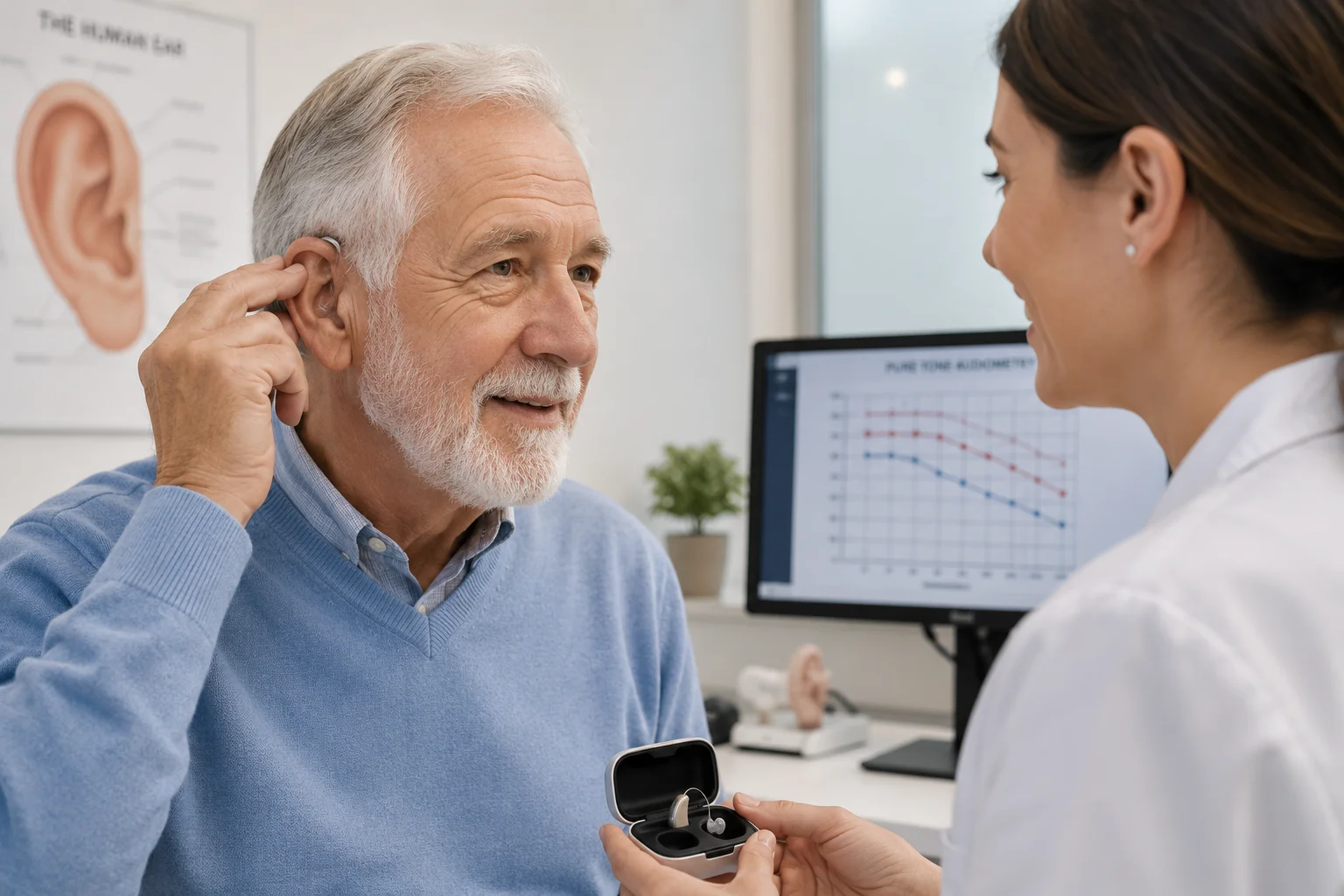
- OTC hearing aids: Since the FDA's 2022 rule took effect, adults 18 and older with perceived mild to moderate hearing loss can buy air-conduction hearing aids without a prescription or audiologist visit, often at a fraction of clinic prices.
Practical Steps Before You Buy
Coverage details are easy to overlook until the bill arrives, so a few checks up front save real money:
- Call the number on your Medicare Advantage card and ask specifically: "What is my hearing aid allowance, and which providers are in-network?" Verbal confirmation from plan documents avoids surprise denials.
- Ask your physician whether your hearing loss, tinnitus, or balance symptoms justify a diagnostic exam order rather than a routine screening — the coding difference determines whether Part B pays anything at all.
- If you have unexplained tinnitus alongside stress, sleep disruption, or anxiety, it's worth understanding the biology behind it before assuming it's purely mechanical hearing loss; our explainer on Can Stress Cause Tinnitus? The Cortisol Link Explained covers how the body's stress response can influence perceived tinnitus loudness.
- Compare an OTC device against a prescription fitting only after a baseline hearing test — self-diagnosing "mild to moderate" loss without one risks under- or over-amplification.
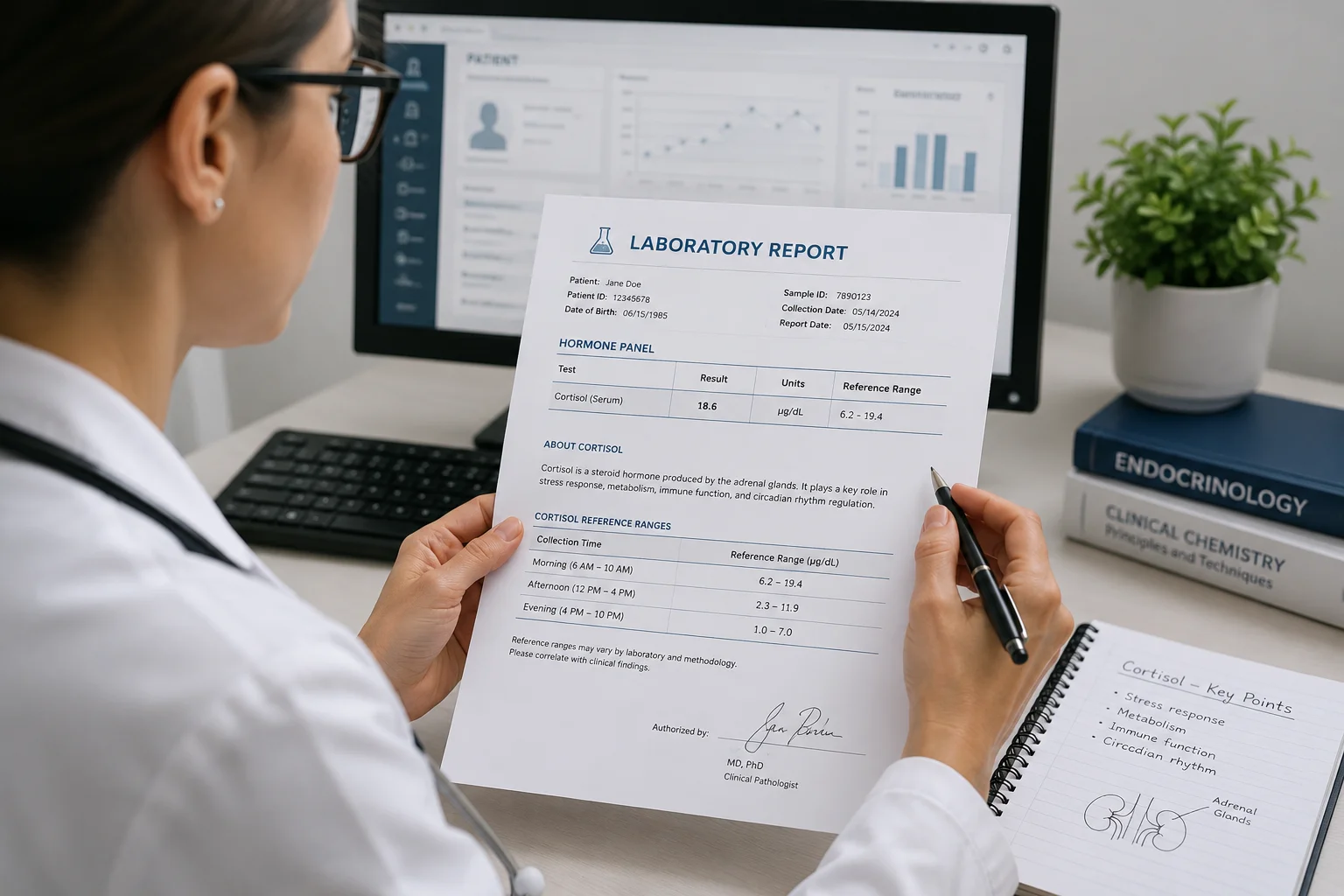
- If a clinician has flagged chronic stress as a contributing factor to your symptoms, our guide to Cortisol Testing: Clinical Biomarkers of Chronic Stress explains what the lab panels actually measure.
Safety Considerations and Who Should See a Professional First
OTC hearing aids are FDA-regulated for output limits and are considered safe for their intended population, but they are not appropriate for everyone. The FDA's own consumer guidance flags several red-flag symptoms that call for a medical evaluation before self-purchasing any device: sudden or rapidly worsening hearing loss, hearing loss in only one ear, drainage or bleeding from the ear, dizziness, and visible ear deformity or foreign objects, according to the FDA's OTC hearing aids guidance. Ignoring these signs and self-fitting a device can mask a treatable underlying condition rather than address it. Beneficiaries with severe or profound hearing loss generally need a prescription device fitted by an audiologist, since OTC hardware is built specifically for the mild-to-moderate range. The National Institute on Deafness and Other Communication Disorders (NIDCD) also notes that improperly fitted amplification can, in rare cases, cause discomfort or further threshold shifts, which is why a baseline audiogram matters even when you plan to buy OTC.
The Bottom Line
If you're relying on Original Medicare alone, budget for the full cost of hearing aids yourself — Part A and Part B will not contribute beyond a qualifying diagnostic exam. Before you commit to a purchase, check your Medicare Advantage hearing allowance if you have one, confirm Medicaid dual-eligibility if applicable, ask about VA enrollment if you're a veteran, and price out FDA-regulated OTC options against clinic fittings. None of these paths make hearing aids free for most people on Original Medicare, but stacking the right one against the purchase can turn a $6,000 out-of-pocket expense into a few hundred dollars — and that gap is worth confirming before you sign anything.

The Health Findings Lab Research Team is a dedicated group of health writers, data analysts, and editorial reviewers. Operating under strict, evidence-based editorial guidelines, the team synthesizes peer-reviewed clinical literature to provide objective insights. Our collaborative approach ensures that every review prioritizes verifiable efficacy and manufacturing transparency over marketing hyperbole.