Introduction
Appetite suppression is the entire point of GLP-1 medications like semaglutide and tirzepatide, and for most patients it works. The problem is that appetite doesn't discriminate between excess calories and the nutrients the body still needs. When food intake drops sharply, protein intake is usually the first thing to fall short, and a real-world study of 60 adults using a GLP-1 receptor agonist found that participants averaged only about 17.5% of calories from protein, below the range clinicians recommend for anyone in a calorie deficit.
This guide translates the current clinical research on GLP-1 nutrition into a practical eating pattern: what to prioritize, how much protein actually matters, and how to manage the gastrointestinal side effects that make eating well harder in the first place. For background on how these medications work and what the underlying trials show, see our deep dive on GLP-1 weight loss drugs.
The Science: Why Nutrition Strategy Matters on GLP-1 Therapy
GLP-1 receptor agonists slow gastric emptying and act on appetite centers in the brain, which is why meals feel more filling on a smaller volume of food. That mechanism drives the weight loss, but it also creates two predictable nutritional gaps.
The first is lean mass loss. Body composition sub-studies from major GLP-1 trials consistently show that a portion of total weight lost, commonly cited in the range of roughly one-fifth to as much as 40% depending on the study population and duration, comes from lean tissue rather than fat. A 2025 network meta-analysis of 22 randomized controlled trials, published on PubMed, found lean mass loss accounted for roughly a quarter of total weight lost across GLP-1 therapies, with semaglutide and tirzepatide producing the largest reductions. A 2025 presentation at the Endocrine Society's ENDO meeting reported that semaglutide-driven weight loss included a meaningful lean-mass component, and that women and older adults appeared to carry a higher risk. Researchers were clear that this isn't unique to GLP-1 drugs: any sufficiently large calorie deficit, including from diet alone or bariatric surgery, produces some lean mass decline. The clinical question isn't whether it happens, but whether it's proportionate and whether nutrition and exercise can limit it.
The second gap is micronutrient intake. A 2025 review in the International Journal of Obesity noted that early satiety, nausea, and narrowed food preferences on GLP-1 therapy commonly reduce dietary variety, with iron, vitamin B12, vitamin D, calcium, and thiamine flagged as the nutrients most likely to fall short. Unlike bariatric surgery, there's currently no formal consensus on pre-treatment micronutrient screening for GLP-1 patients, which means the responsibility largely falls on patients and their care teams to build a deliberately nutrient-dense eating pattern from day one. The NIH Office of Dietary Supplements maintains consumer fact sheets on each of these nutrients, including recommended daily intakes and common food sources, which can help patients track whether their meals are covering these gaps.
Clinical Evidence & Nutritional Priorities
Across the current research, a handful of strategies show up consistently as ways to support better outcomes alongside GLP-1 therapy:
- Prioritizing protein at every meal may help preserve lean muscle mass during periods of reduced appetite, according to multiple body-composition studies in GLP-1 users.
- Combining adequate protein intake with resistance exercise appears to support lean mass and bone health more effectively than diet or exercise alone, based on clinical observations from Mass General Brigham researchers.
- Spacing smaller, nutrient-dense meals across the day may help patients meet protein and micronutrient targets despite a reduced overall appetite.
- Monitoring for common deficiencies (iron, B12, vitamin D, calcium, thiamine) is increasingly recommended given the reduced dietary variety associated with GLP-1 therapy.
- Ongoing randomized trials, including at least one enrolling now, are specifically testing whether structured high-protein counseling changes body composition outcomes compared to standard dietary advice in GLP-1 patients.
None of this means the medication itself is unsafe or that muscle loss is inevitable. It means the nutritional side of treatment isn't automatic, and needs its own plan. For a broader look at how much protein current guidelines recommend for adults generally, see our 2026 protein guide, and for the wider evidence base on higher-protein eating patterns, our high-protein diet review breaks down the benefits and risks in more depth.
Building a GLP-1-Friendly Plate
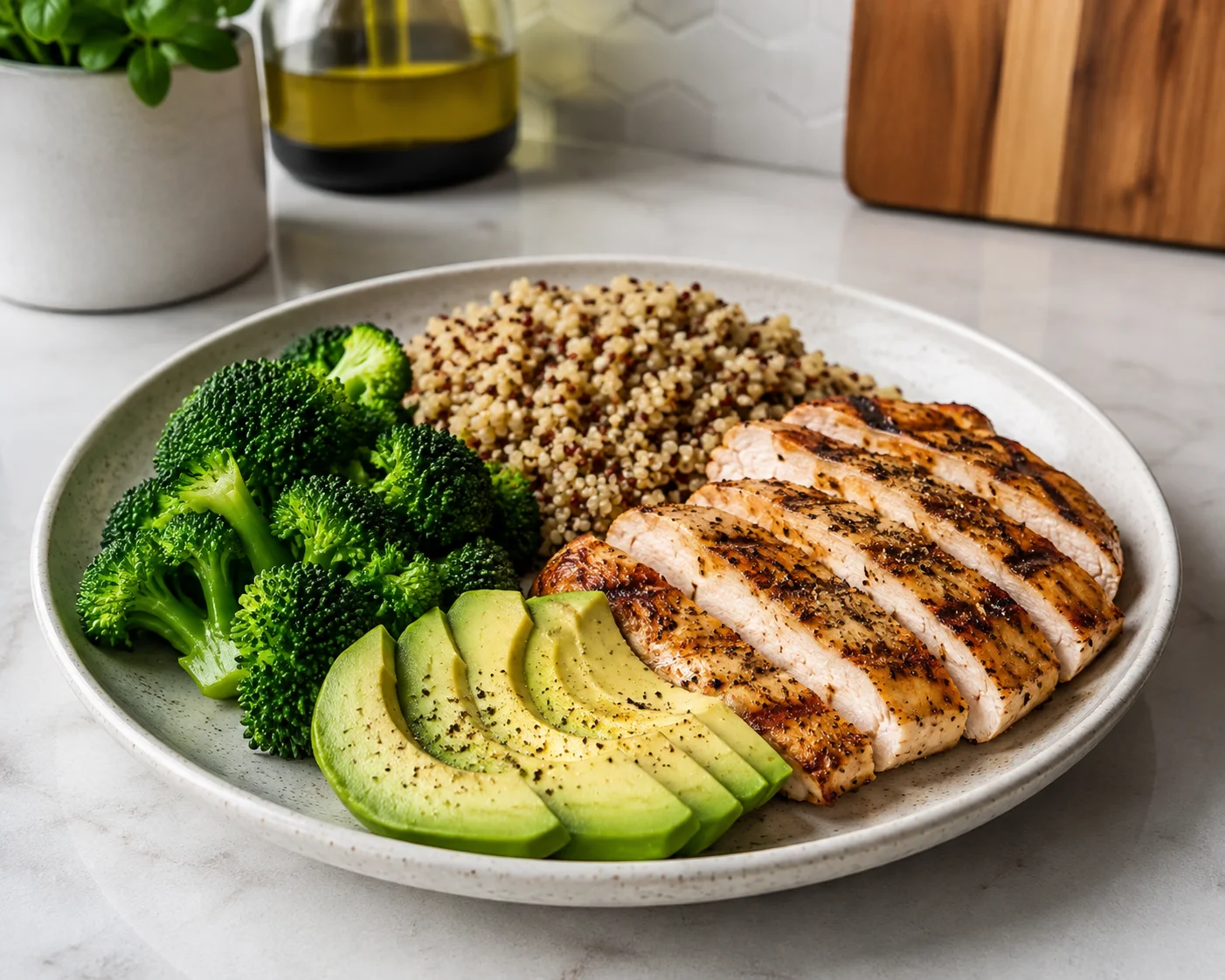
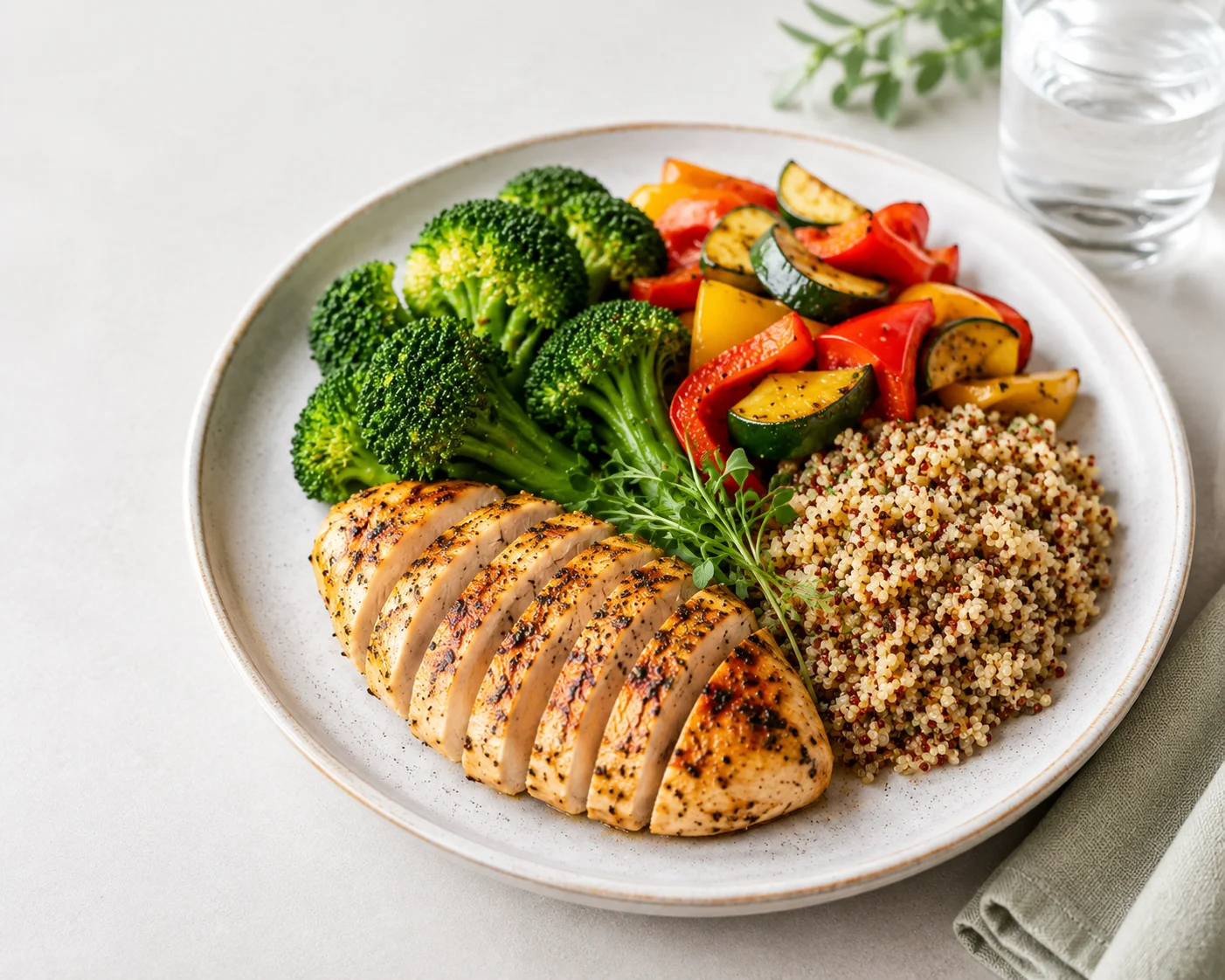
Because appetite and stomach capacity are both reduced, every bite needs to count. A practical framework used by dietitians working with GLP-1 patients:
- Protein first: Eat the protein portion of the meal before other components, since it's the nutrient most likely to be under-eaten once fullness sets in. Eggs, Greek yogurt, cottage cheese, fish, poultry, tofu, and lean beef are commonly recommended starting points.
- Fiber in moderation: Some fiber supports digestion and blood sugar stability, but very high-fiber, high-volume meals can worsen the bloating and early fullness many patients already experience. Cooked vegetables are often better tolerated than large raw salads early in treatment.
- Fluids between, not during, meals: Drinking large amounts of water alongside food can fill the reduced stomach capacity before enough calories and protein are consumed. Sipping fluids between meals instead helps preserve appetite for nutrient-dense food.
- Healthy fats for calorie density: Since total food volume is lower, small amounts of nuts, olive oil, or avocado help meet energy needs without requiring large meal volumes.
Important Considerations & Practical Usage
Clinical nutrition reviews commonly cite a target of roughly 1.2 to 2.0 grams of protein per kilogram of adjusted body weight per day for patients on GLP-1 therapy, a range broadly consistent with recommendations for anyone undergoing significant intentional weight loss. This aligns with the general population shift in the 2025-2030 Dietary Guidelines for Americans, published jointly by the USDA and HHS, which raised the standard protein target from 0.8 g/kg to 1.2-1.6 g/kg of body weight per day for healthy adults, prioritizing protein at every meal. Some researchers studying resistance-trained GLP-1 patients have tested intakes closer to 1.6 g/kg alongside structured strength training, with the goal of preserving more lean tissue than diet alone would allow.
In practice, hitting that target with a suppressed appetite usually means:
- Treating protein as the anchor of each meal rather than an afterthought.
- Using protein-forward snacks (Greek yogurt, cottage cheese, a hard-boiled egg, a protein shake) between smaller meals if three full meals aren't realistic.
- Working with a registered dietitian or prescribing physician to set an individualized target, since protein needs vary by body size, kidney function, age, and activity level.
Resistance training two to three times per week is the exercise pattern most consistently linked to better lean-mass outcomes in this population, more so than cardio alone, though both have independent health value. Patients starting a new exercise routine while on a GLP-1 medication should build up gradually, since reduced calorie and carbohydrate intake can affect training energy and recovery.
Safety Profile & Potential Side Effects
The eating pattern described here is a general nutritional framework, not a substitute for individualized medical or dietetic advice. A few safety points are worth flagging directly:
- Patients with kidney disease or other conditions affecting protein metabolism should not adopt a high-protein target without a physician's guidance, since protein needs and safe upper limits differ substantially in that context.
- Gastrointestinal side effects, including nausea, reflux, and constipation, are common with GLP-1 medications and can be worsened by eating too quickly, eating high-fat or high-fiber meals in one sitting, or drinking large volumes of fluid with meals.
- Unintentional rapid weight loss combined with poor nutrient intake can increase the risk of gallstones, a documented complication of fast weight loss regardless of the method used to achieve it.
- Anyone experiencing persistent vomiting, inability to keep food down, severe abdominal pain, or signs of dehydration should contact their prescribing clinician rather than adjusting the medication or diet on their own.
- Routine lab monitoring for iron, B12, vitamin D, and other commonly affected nutrients is a reasonable conversation to have with a healthcare provider, particularly for patients on GLP-1 therapy for six months or longer.
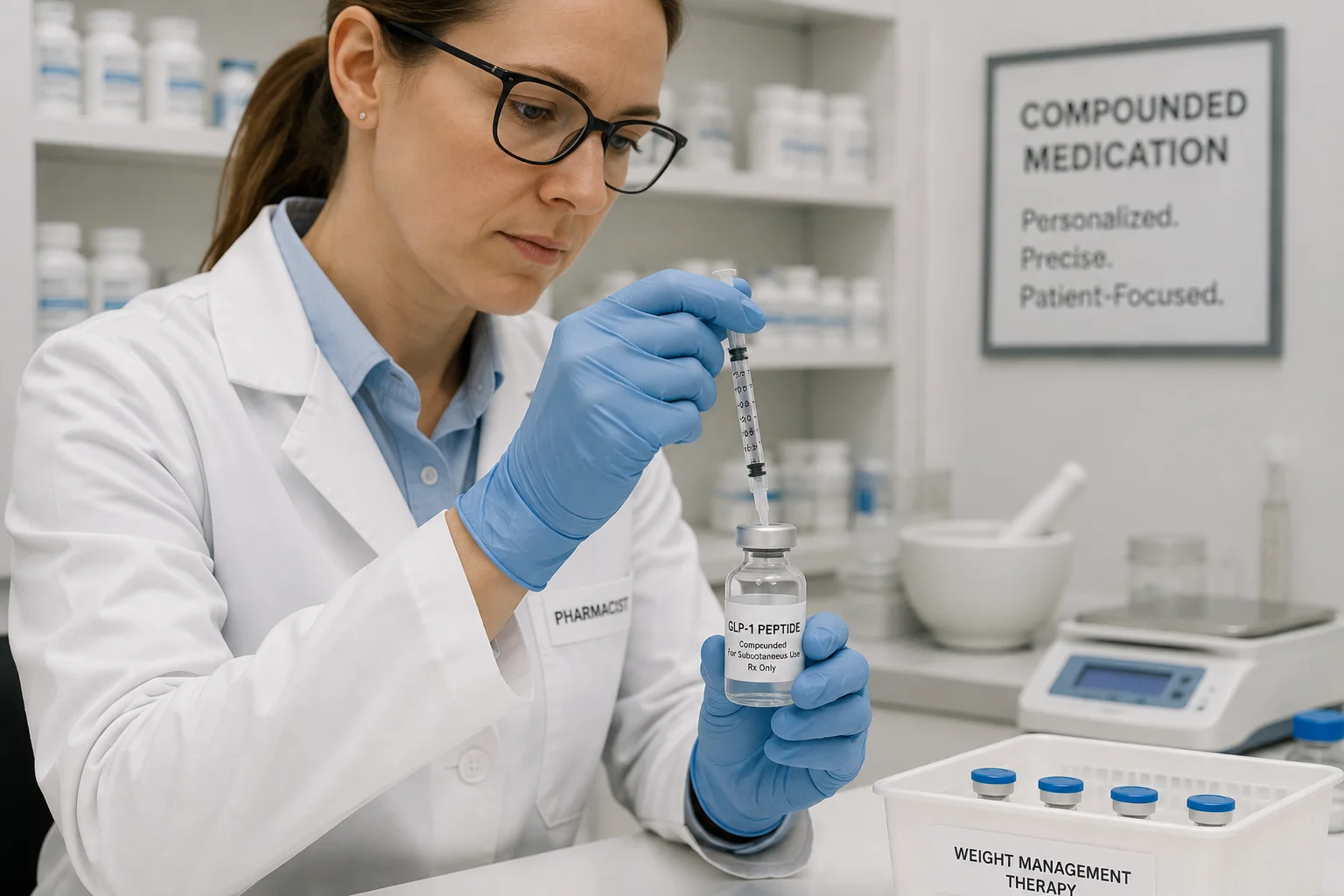
For readers evaluating compounded or non-branded versions of these medications, our separate audit of compounded GLP-1 peptides covers the additional safety and sourcing questions worth asking before starting one.
Conclusion & Recommendation
GLP-1 medications change how much a person eats; they don't automatically change what a person eats. The clinical evidence so far points in a consistent direction: patients who prioritize protein, moderate fiber intake at meals, hydrate strategically, and pair treatment with resistance exercise tend to preserve more lean mass and report fewer nutrient gaps than those who let appetite suppression dictate their diet by default. None of this requires a rigid or restrictive meal plan, just a deliberate one built around a much smaller appetite budget. Readers who want a broader foundation on protein targets across different goals, not just GLP-1 therapy, can start with our complete 2026 protein guide.

The Health Findings Lab Research Team is a dedicated group of health writers, data analysts, and editorial reviewers. Operating under strict, evidence-based editorial guidelines, the team synthesizes peer-reviewed clinical literature to provide objective insights. Our collaborative approach ensures that every review prioritizes verifiable efficacy and manufacturing transparency over marketing hyperbole.